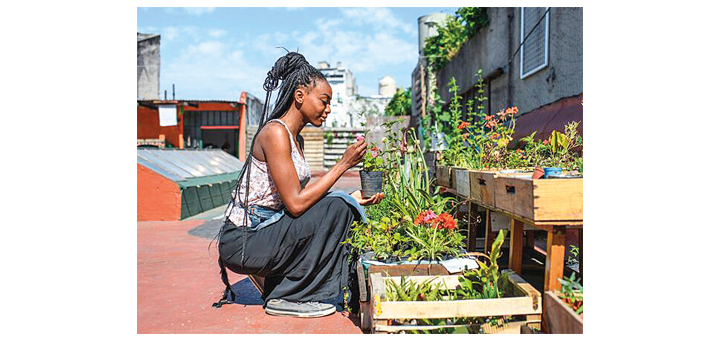

Welcome again to Can You Dig It?, your monthly look at all things growing in the city. I received an email that was very discouraging about growing food in Springfield and wanted to explore some of the very real concerns that were addressed, and provide a few potential solutions that any individual or group can utilize to overcome them. Other issues⸺not included in the email⸺will be looked at in next month’s installment. Let’s get started.
Land
Here is perhaps the biggest problem most urban farmers⸺and many new farmers⸺face. Aside from just acquiring land and space, complications include the quality of the soil, location of the land, and general safety concerns about where the garden may be located. Complaints about smells, appearance, waste and more are very real issues that need comprehensive solutions that should not be ignored. Unfortunately, there are no easy solutions here, but there are steps that can be taken if you look at it from a solutions framework (i.e., do your homework!) and not just from a standpoint of what you can’t have or achieve.
Land ownership has been a serious issue for Black farmers since the turn of the last century, and we are nowhere near finding a just outcome. What can be said in this limited space is that every unused space has the potential to be a productive small farm or garden that can feed many people, and as a society that is seeing increasing pressure on farming and the cost of real food, we should be making stronger efforts to make use of any and all spaces that can be utilized. No easy solution here.
Water
As you know, there is no growing food without clean, accessible water, but who is responsible for that when you are seeking to grow food in a lot or park? In some cities, community gardens⸺through organizing farmers and consumers⸺have managed to secure city or state funds to guarantee that water use is not too big a financial burden, as tapping into a city line may require a crew to come and dig up the street which can be quite costly. Additionally, you really need to know what types of additives are being used in city water, as it can have adverse effects on your plants. One possible solution is to harvest rainwater which many small farmers/community gardens utilize quite effectively. The storing of the water⸺like the storing of solar energy⸺requires the vessels to hold it in, and so it seems providing discounted or free tanks for folks seeking to minimize city water would be a positive step to take. Keep in mind, however, that no amount of water will suffice if you are not utilizing mulch or cover crops to retain the moisture in the soil. No simple solutions here, but this is a somewhat manageable problem.
Environmental Contamination
There is no getting around the fact that it is very hard to find soils in the US that have not had some level of contamination in them. There is a level of natural contaminants that occur over time that are found in soils which are not harmful to humans. But city soils, where any number of past deeds may render the growing of food in them harmful, need to have special considerations when being utilized. This doesn’t mean that spaces with some level of contamination can’t be used; it just means that we have to be very thoughtful on how and where we make use of such spaces. Additionally, knowing the correct technique(s) for how to address the very real concerns that we should have when growing food in places that may have had some contamination should be the utmost priority.
In some places the way this was mitigated was through building soil up to 3 feet above the level where the issues were found, and so bypassing the entire level of contamination was what worked quite effectively. In other situations I’ve seen, the removal of the soil was the only way to achieve the needed results. Whatever the method, a proper soil test is the first step to be taken when considering growing food in any soil. I would even consider a soil test for some chain store “soil” brands from companies that inculcate Miracle Grow or other petroleum-based additives. You’d be surprised what is being sold as good out here in the world today. Until next time. ■