Nobody chooses to live in poverty. Being poor is not the result of bad decisions, a lack of hard work or moral failing. Unfortunately, the stubborn myth that poverty is some sort of a personal failure endures in too many corners of our society.
We’re marking the 60th anniversary of the War on Poverty this year, a war that my organization, Springfield Partners for Community Action, has been fighting since its inception. When President Lyndon B. Johnson signed the Economic Opportunity Act into law in August 1964, he established a number of social programs to promote education, health, employment, and general welfare for impoverished Americans. While this country has made a lot of progress since then, we still have a way to go when it comes to everyone respecting each other regardless of race, color or creed. Despite our laws, poverty and discrimination remained deeply intertwined in profound ways, both explicitly and implicitly
This idea about “who” experiences poverty and “why” is flawed because it ignores the structural inequities that lock people out of opportunities and traps them in an onerous cycle that is very difficult to break. These structures are responsible for the disparities we see when it comes to access to transportation, education, childcare, healthcare, high-paying jobs, and affordable housing near work, as well as in interactions with the criminal justice system.
The myths about the poor are meant to divide us and encourage those unaffected by poverty to judge them as “less than,” to either look away or assign blame. All too often, these attitudes are seen through a racist lens, which perpetuates damaging stereotypes. Who can forget Ronald Reagan’s mythical “welfare queen,” a caricature of a poor Black woman who was scamming the system and taxpayers?
Of course, fraud exists, and whether it’s a nickel or a dime, it’s wrong. But a single mother who gets double benefits because she misrepresented her income probably gets away with a couple of hundred dollars. When doctors, lawyers and other professionals within the system commit fraud, they can bilk the system for hundreds of thousands of dollars. A doctor might bill for pricey services not provided or a lawyer may misappropriate funds or falsify claims that lead to a financial windfall at the taxpayers’ expense. But the professional class always gets a pass, while the disadvantaged participants get the blame.
“Those people should just pull themselves up by their bootstraps and get a job!” That’s the charge against people receiving help from the federal government. However, it’s actually the inadequate safety nets and unearned judgment that make it harder for people to move up the social ladder, let alone try to build generational wealth.
People trapped in poverty can’t just magically find a higher-paying job or go back to college. Discrimination from bias is often prevalent in situations where there is some sort of discretion involved: an employer calling back a job applicant, a landlord deciding which family to rent to, a bank granting a student loan or mortgage, a police officer deciding whether to give a ticket to a speeding driver. Despite the laws, the application of them is often not equal.
Addressing poverty – especially deep poverty – is going to require a multifaceted approach that includes policy changes, economic investment in marginalized communities, and efforts to battle discrimination at all levels of society. But it’s also important to educate the entire populace about the realities of poverty – its roots and layers – and how it cycles through generations. Children growing up in poverty are more likely to experience poor education, health issues, and job instability, perpetuating the cycle. Further, many people living in deep poverty are oftentimes suffering from some mental condition, which only exacerbates the problem, making it harder for help to reach them.
Girder by girder, judgment and discrimination have built the infrastructure that traps poor people in the cycle. If we can dispel the pervasive myths and attitudes about poverty, whether implicit or explicit, the policy changes will hopefully follow. By tackling the root causes of discrimination and implementing policies that promote fairness and inclusion, we can build a more equitable society and help create opportunities for all people to improve their economic conditions and overall quality of life. And when we help change the hearts and minds of our neighbors to empathize and understand the layers of poverty, we can see winning the War on Poverty is not about boot straps, but community. ■

Recent Stories
-
Free Summer Eats Meal Program Returns to Springfield to Keep Kids and Teens Nourished All Summer Long
With the school year having ended on June 23rd, Chartwell K12, Springfield Public Schools, and Home Grown Springfield are helping ensure that no child goes hungry this summer through the Summer Eats Free Meals Program.


Upcoming Events
[tribe_events view=”photo” tribe-bar=”false” events_per_page=”2″]
Af-Am Point of View Recent Issues
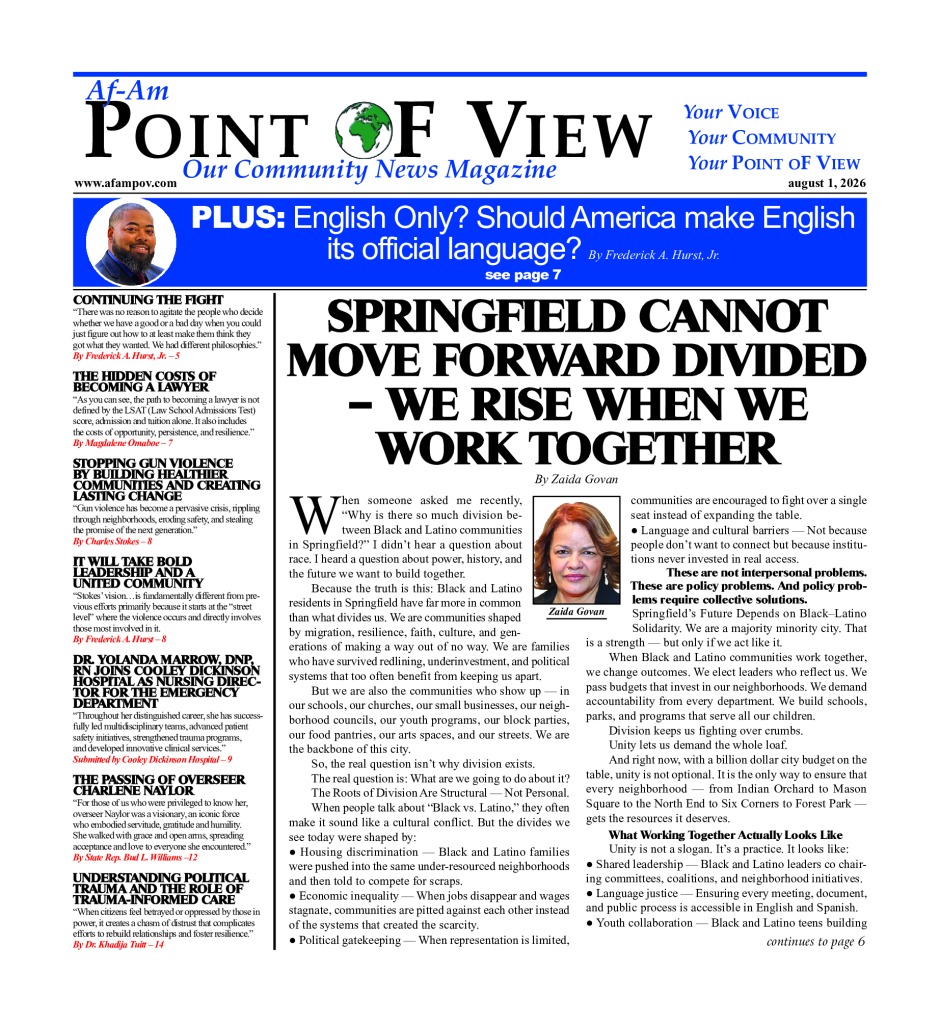
August 2026
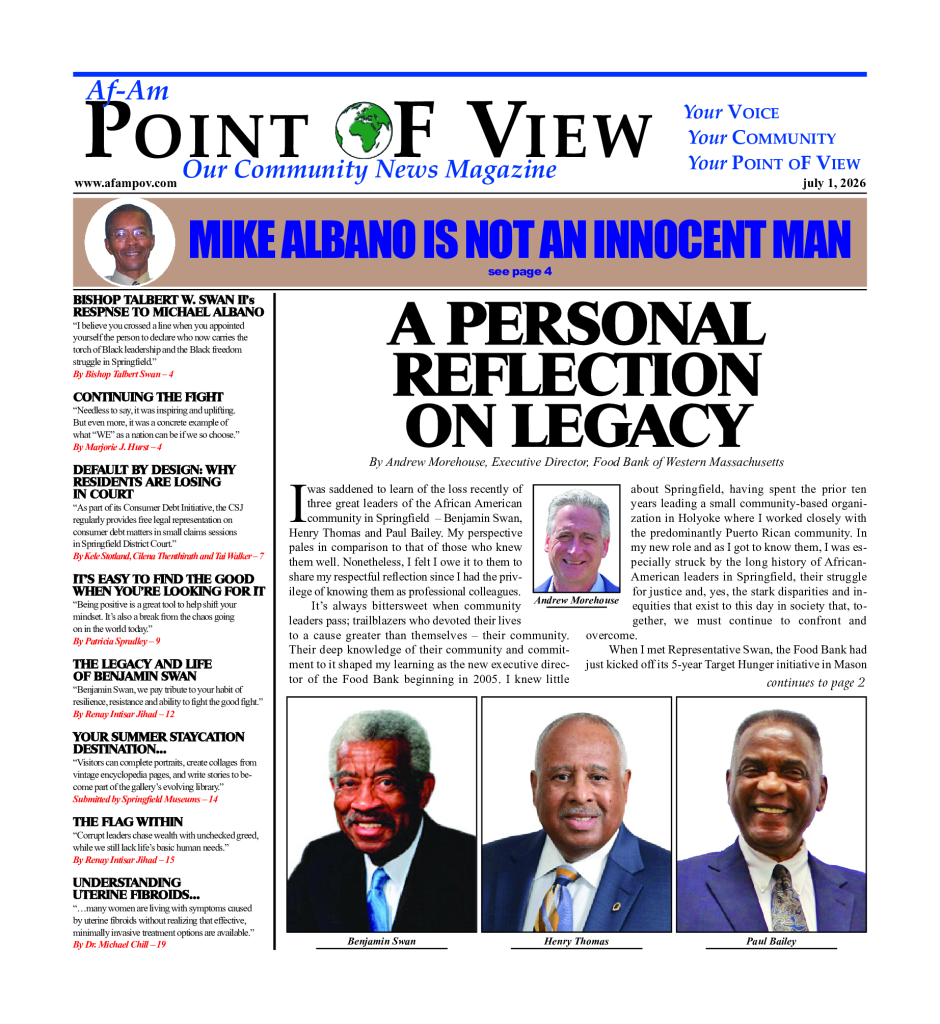
July 2026
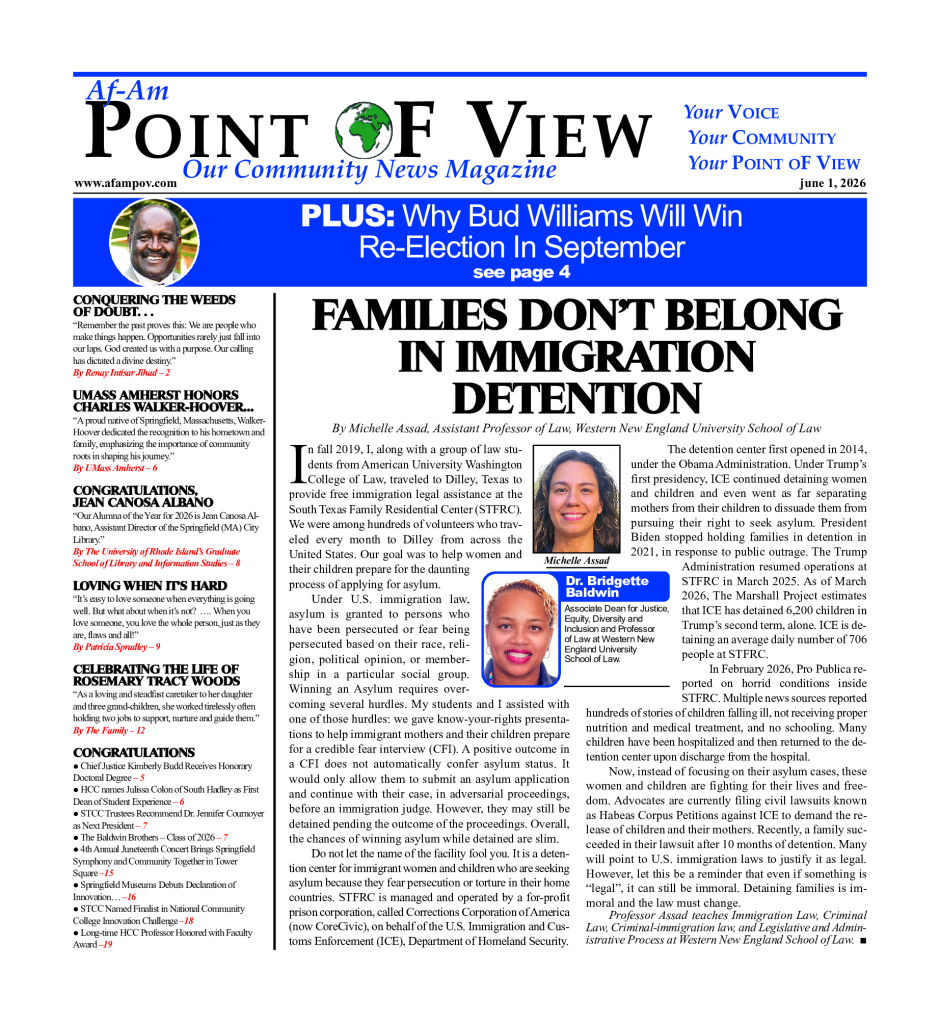
June 2026
May 2026
See More Past Issues of Af-Am Point of View Newsmagazine