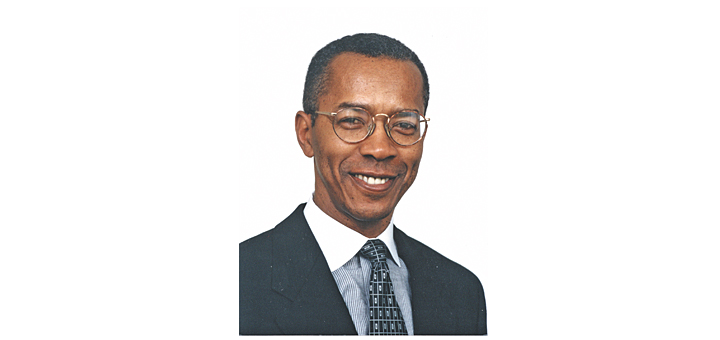

I must admit I haven’t been completely honest with myself in writing this article, which is why I’ve had a hard time finishing it. I’ve attempted to avoid the emotional elements in favor of the facts without realizing that the facts and the emotional elements are one and the same.
The fact is that Bud Williams had been like a brother to me. We were inseparable friends and allies for a good 35 years even as we were as unalike as night and day. As things turned out, we had common “enemies” even though they weren’t of particular interest to me when I returned to Springfield in 1981 from Chicago with law degree in hand. But Bud recruited me vigorously even though I wanted no part of the Springfield political wars to which I had much exposure before I left Springfield years before. But he finally convinced me.
I had always been involved in Springfield politics. I was way ahead of my time. I ran for mayor right out of college (1969) and for city council years later (the mid-70s). (The young rooky Bud Williams was one of my ardent supporters.) But when I left Springfield and returned many years later, my primary focus was on law career and family. I didn’t need the fight that Bud was offering and I didn’t want it but the warrior in me succumbed to his persistent pleas to help him in his fight to resist the late State Representative Raymond Jordan’s efforts to prevent Bud’s friend and mentor, the late Mo Jones, from winning a city council seat. And I got sucked into the fight.
I always knew that in Bud’s mind, I was a “use” for his personal future political plans. But I saw him as a future possibility for political change who, in time, would grow into the role. And after jogging with him down Boston Road for decades, and fighting side-by-side with him against odds that should never have rebounded in our favor, we gained a foothold in Springfield politics, which is when I began to understand, from Bud’s subsequent behavior, that his motivation all along was to one day become some weird and impossible combination of Mo Jones and Raymond Jordan, which reflected a philosophical posture of political stagnation that I could never accept, which probably accounts for why Williams has been a disappointment to me and many others who had expected him to bring some badly-needed life back to the 11th Hampden District seat.
In the meantime, it has become increasingly clear that Williams, who has occupied his 11th Hampden District seat in the state house since 2017, is not only a disappointment but that he also can be defeated by a qualified candidate who works hard and has the courage to candidly address the real issues of concern to the voters of the district. So, it was with a sense of relief for many that he was seriously challenged in the 2024 election by Johnny McKnight.
According to records supplied by the Elections Office, Williams received 1768 votes to McKnight’s 1523. Williams won in three of the district’s five Wards (3, 4 and 5) and McKnight won in two (6 and 7) while Williams’ razor thin margin of victory in the entire 11th Hampden District was only 245 votes. The overwhelming majority of Williams’ 245 total winning margin came from Ward 4 (211 votes). Of the two other wards that Williams won (3 and 5), he won by only 37 and 25 votes, respectively, while losing to McKnight in the other two wards (6 and 7) by 34 and 2 votes, respectively. (It is worthy of mention that Williams lives in Ward 7.)
It seems fair to say that Williams came very close to being that rare incumbent loser while Johnny McKnight exposed his vulnerability like no one had done before, which is why I chose to write my opinion of the reasons why for the benefit of future challengers.
And, the simple first answer is that Williams hardly worked. It appeared that he didn’t think he had to work hard probably because he never before had to against any previous challenger. After his initial relatively easy defeat of the son of retiring State Representative Benjamin Swan, Williams seemed to have succumbed to complacency, the old bane of so many long-term incumbents. It was only at the very end of the 2024 campaign, when it appeared that he might be in trouble, that Williams showed any interest in campaigning.
Shortly after he announced his candidacy, Johnny McKnight called me. I remain uncertain why he called me because I didn’t hear from him again until a few weeks before the election. But during our initial phone conversation I cautioned him that, when threatened, Bud Williams will work very hard. And if he intended to defeat him, he would have to work much harder than others who had tried and failed.
I also offered to write an introductory article about McKnight because I was very much aware that, even though he ran for office a few times and accumulated a reasonable number of votes, he lacked the personal exposure of Bud Williams who was born and raised in Springfield, attended public schools and was a well-known athlete who once wowed the neighborhood with his basketball exploits on the DeBerry School court. And who was well connected to the Black church community.
Williams was also well-known as a Springfield probation officer who ran and won a seat on the city council after trying four times. And he could have remained in his city council seat for as long as he wished but he successfully challenged retiring former State Representative Benjamin Swan’s son for the vacant seat where he remains as a long-term incumbent.
Any state representative seat, and especially one dominated by Ward 4, is a more “personal” seat than most political seats below it and above it, which is why Ray Jordan, the original 11th Hampden District State Representative, and his successor, Benjamin Swan, both of whom had years of personal as well as political exposure to its residents and voters, were all but untouchable as incumbents.
On the other hand, Johnny McKnight’s personal (and, to some degree, political) relationships were limited. Although voters in the 11th Hamden District knew his name and that he had run for other offices, many (especially in Ward 4) claimed they knew little about him as a person separate from politics, which made his quest for the district’s state representative office that much more difficult and his need to work hard and smart that much more urgent.
I didn’t know McKnight personally either, which is why, when McKnight ignored my early offer to write a biographical sketch of him in Point of View, I became skeptical of his ability to win. His was a rooky mistake.
A nonincumbent cannot afford to allow any opportunity for exposure to voters slip from his grasp, especially an opportunity to appear in the only well-read African American newspaper in Western Massachusetts.
Yet, as it turned out, Johnny McKnight worked very hard. He organized a reasonably good (though somewhat narrow) team, canvased the district, attacked the relevant issues, raised a credible amount of money combined with an infusion of his own money, and focused in on Williams’ prime vulnerability: his notorious and often-discussed inaccessibility to his constituents.
Many complain that Williams ignores telephone calls and in the rare times he does answer, his often terse commitment to get back to callers with more information goes unmet. While others complain that when encountered in public by a concerned constituent with a specific need, he is generous with his promises to help but seldom follows up. And yet others say he ignores many requests from community organizations for his presence and if he appears, he often makes fancy speeches filled with promises he doesn’t keep and yet rarely fails to finagle his way into the organization’s photo op. And he regularly arrives late and leaves early. I’ve listened to many of these complaints and am convinced that the discontent is real and runs deep.
But the most glaring complaint that complements all the others is that Bud doesn’t have an office location anywhere in the district! Not even in Ward 4 where both Raymond Jordan and Benjamin Swan both maintained prominent offices in the heart of Mason Square that were easily accessible to everyone. And while both Jordan and Swan lived in Ward 4, Bud Williams lives in Ward 7 far away from the heart of his most loyal constituency.
It would seem unfair to tell a man where to live or even to criticize him for where he lives as long as his residence is legal and he compensates for his dwelling distance by other effective means of contact, which Bud Williams clearly does not do well, which is why Johnny McKnight effectively used complaints of Bud’s inaccessibility (which dovetailed neatly with Bud’s own foolish decision to hardly campaign) as a political weapon to almost defeat him. And he would have if not for a few amateur missteps.
My advice to McKnight for future reference is to not turn down a free opportunity for valuable early news coverage. It wasn’t offered as an endorsement but only because it was newsworthy. Our readers and voters in the 11th Hampden District deserved to be informed about him early in the race apart from his just being another aspirant for political office.
It would also have been helpful if McKnight had broadened his volunteer base. There is nothing more damaging to an aspiring politician than to make weak showings at his own canvasing and standouts and nothing more valuable for such a candidate than to have a visible crowd of people with him, especially in Ward 4 where the precinct-by-precinct numbers show that with just a bit more effort (especially in precincts 4B, D, G and H), McKnight could have won the entire 11th Hampden District election.
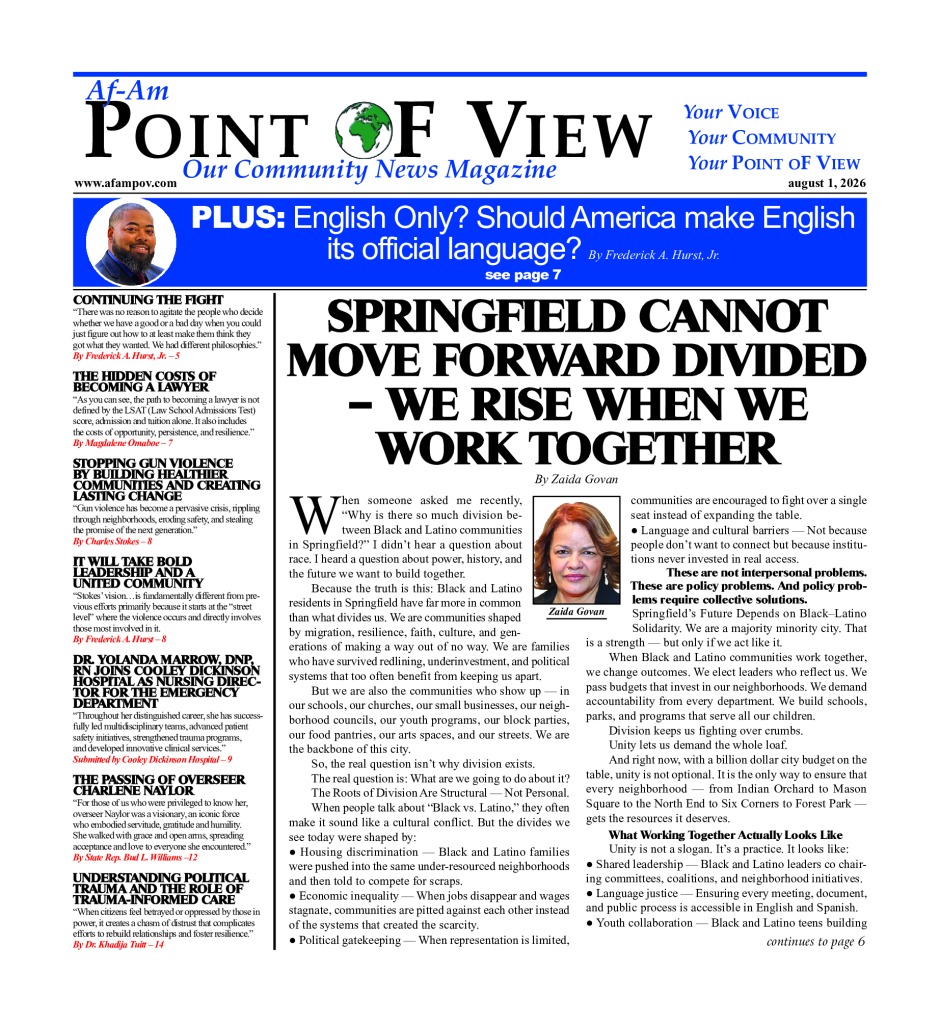
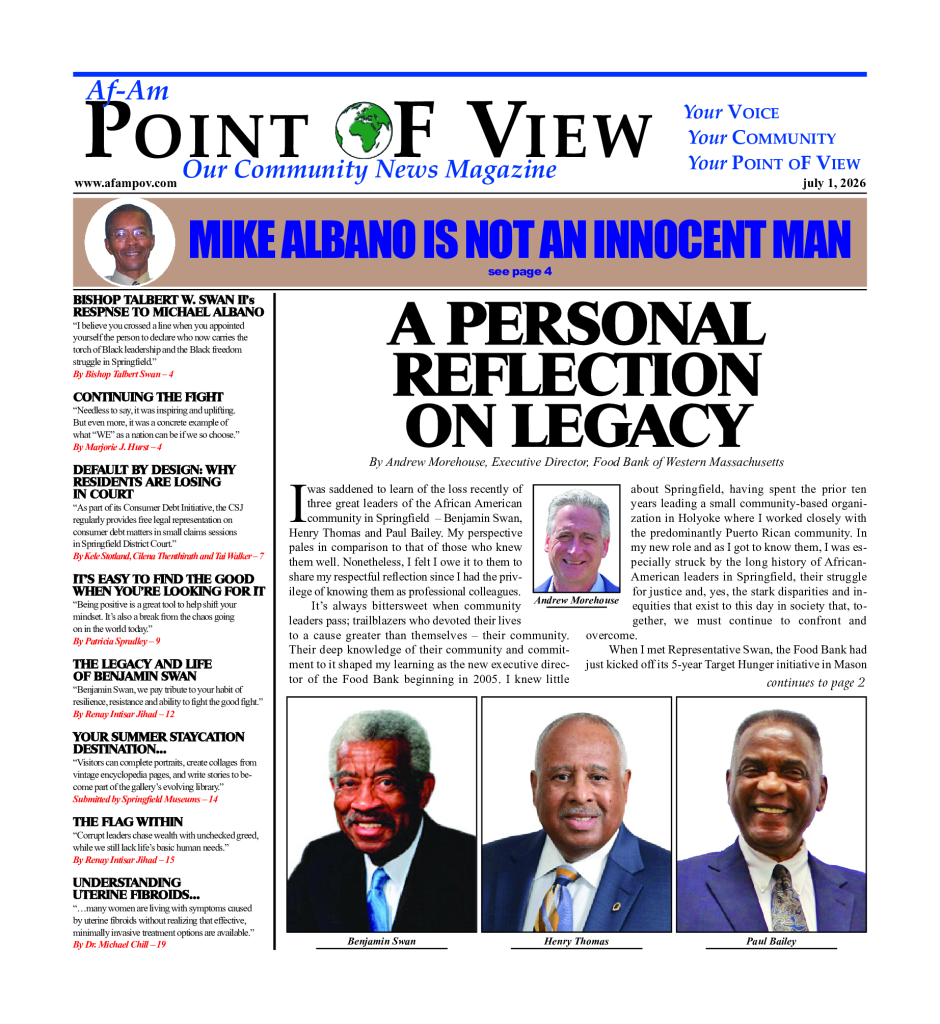
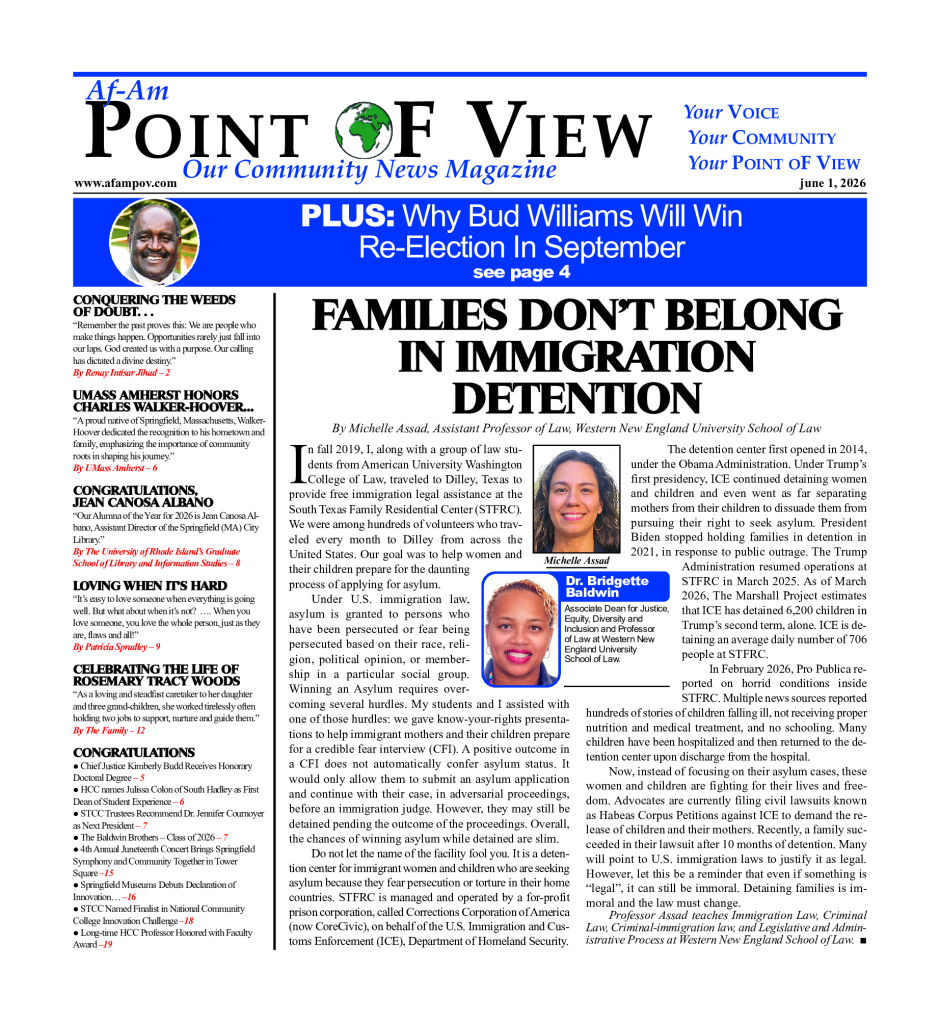
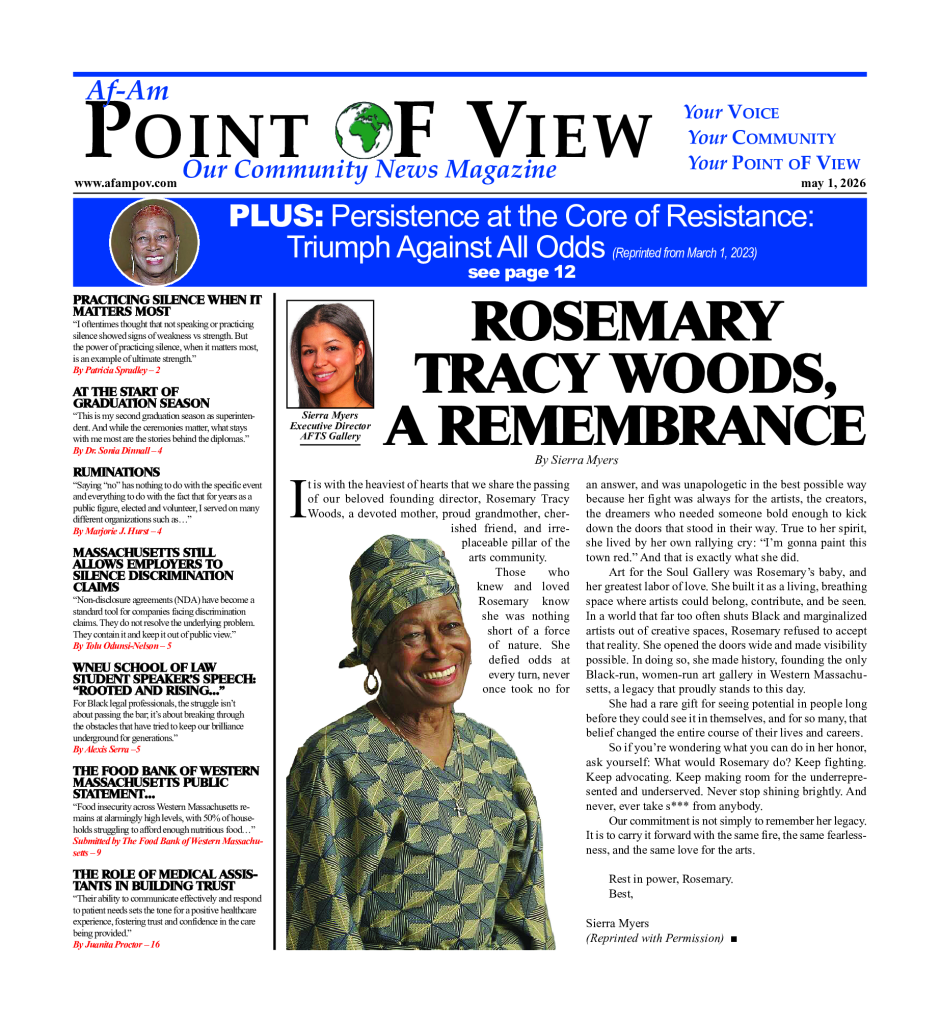
And, finally, I would advise McKnight to work more closely with Justin Hurst and his extensive political machinery if he plans to run again. The fact is, Bud Williams allowed himself to be used by Springfield’s mayor against the popular Hurst in his quest to become the first Black mayor of Springfield. No doubt some Hurst voters with good memories punished Williams for his dereliction by withholding their vote or by voting for McKnight.
(And, of course, allowing his chief of staff, Malo Brown, another mayoral sycophant, to run against his popular state house colleague, Adam Gomez, also depressed Williams’ numbers. Notably, Gomez got more votes in Ward 4 than Bud Williams (39) and Malo Brown (278). And in 4A, where Gomez crushed Malo Brown by 106 votes, Gomez got 61 votes more than Williams. And 4A was the only precinct in Ward 4 that Williams lost to McKnight. Clearly, some people in 4A who voted against Brown also withheld their votes from Williams which resulted in Gomez beating both of them.)
Being aware of what was at stake for the Black community in the Springfield 2024 mayor’s race, I regularly prevailed upon Bud to discard personal differences and to focus on the bigger picture. But instead, my decades-long running partner allowed his petulance to prevail at the expense of the Black community’s chance (possibly only chance) to take the helm of the mayor’s seat and with it, his own small chance of a meaningful legacy.
I don’t mind saying (with a residual degree of sentimental reluctance) that the 11th Hampden State Representative District voters need candidates with vision who understand that the future lies in a willingness to unite around critical common causes!
Whether it’s Johnny McKnight or any other enterprising political aspirant, clearly, it’s time for a change. Real change! ■