As the arts sector face continued economic pressure in 2026, many Black artists find themselves at a crossroads — confronting structural obstacles, but also carving out new pathways forward. The current downturn in arts funding and shrinking audiences are tangible realities. Yet, within these challenges lie opportunities for transformation, self-determination, and collective resilience.
Economic Headwinds Are Real — But Not the Whole Story
It’s no secret that public and private arts funding has tightened. Grants are more competitive, institutional budgets are strained, and patrons squeezed by inflation and cost-of-living increases are rethinking discretionary spending. Such trends impact every artist, but they disproportionately affect Black artists who historically have less access to generational wealth and institutional networks that buffer economic instability. However, the downturn also sparks innovation. Artists increasingly turn to direct-to-audience models: digital content, virtual exhibitions, social media-driven patronage and subscription platforms.
These tools bypass traditional gatekeepers and allow creators to build sustainable, direct economic relationships with their audiences. Many young Black artists are embracing entrepreneurial art practices. They are launching prints, merchandise, creative workshops, and multidisciplinary collaborations that expand both visibility and income.
Where Does Art Go From Here?
Art in 2026 is not retreating — it’s evolving. Key trends shaping the future include:
● Hybrid spaces, Artist-led platforms — where creators determine access, pricing, community engagement, and artistic direction.
● Cross-sector partnerships.
● Institutional art spaces — museums, galleries, universities — are no longer the only arbiters of cultural value.
Community art centers, pop-up exhibitions, artist collectives, and decentralized networks are redefining the ecosystem. For Black artists, these shifts can mean greater agency and a diversified creative economy.
Is Racism Still Alive in the Arts?
The frank answer: YES. Racism has not disappeared; it has simply shifted diversity initiatives that have opened doors. Museums and galleries now prominently feature Black artists. But beneath these gestures, systemic bias persists.
● Funding gaps— Institutions still allocate more resources to established (often white) artists.
● Market disparities. Works by Black artists frequently sell for lower prices than equivalent work by white artists.
Tokenism over Transformation—Inclusion that stops at visibility without power or influence.
These patterns reflect deeper societal inequities. Efforts to diversify collections are meaningful only when paired with equitable practices in hiring, acquisitions, curatorial authority, and decision-making. True equity means Black artists aren’t just featured — they are integral to shaping the future of the arts.
The Power of Networks
and Community.
In the face of economic and cultural barriers, Black art communities are doubling down on mutual support. Networks such as artist unions, collaborative studios, cultural funds, and mentorship programs are proving pivotal. These structures do more than sustain artists financially — they foster long-term careers, intergenerational knowledge transfer, and collective impact.
Mentorship programs, in particular, are crucial for emerging Black artists navigating an often opaque arts landscape. Programs that provide not just artistic development, but also business training, audience cultivation, and strategic partnerships are becoming blueprints for sustainable success.
Looking Forward:
Hope Through Agency
Black artists in 2026 are not waiting for change — they are making it. Through entrepreneurial creativity, bold collective action, and community-centered art practices, they are redefining what it means to thrive in a challenging cultural economy.
The future of art is not determined solely by markets or institutions. It is being shaped in studios, online stages, street murals, and community hubs across the country. The question is no longer just “Is art valued?” but “Who gets to define that value?” In answering this, Black artists are leading a transformative chapter in our cultural narrative, one that challenges old assumptions and imagines an arts ecosystem rooted in equity, connection, and possibility. ■
Recent Stories
-
Free Summer Eats Meal Program Returns to Springfield to Keep Kids and Teens Nourished All Summer Long
With the school year having ended on June 23rd, Chartwell K12, Springfield Public Schools, and Home Grown Springfield are helping ensure that no child goes hungry this summer through the Summer Eats Free Meals Program.

Upcoming Events
[tribe_events view=”photo” tribe-bar=”false” events_per_page=”2″]
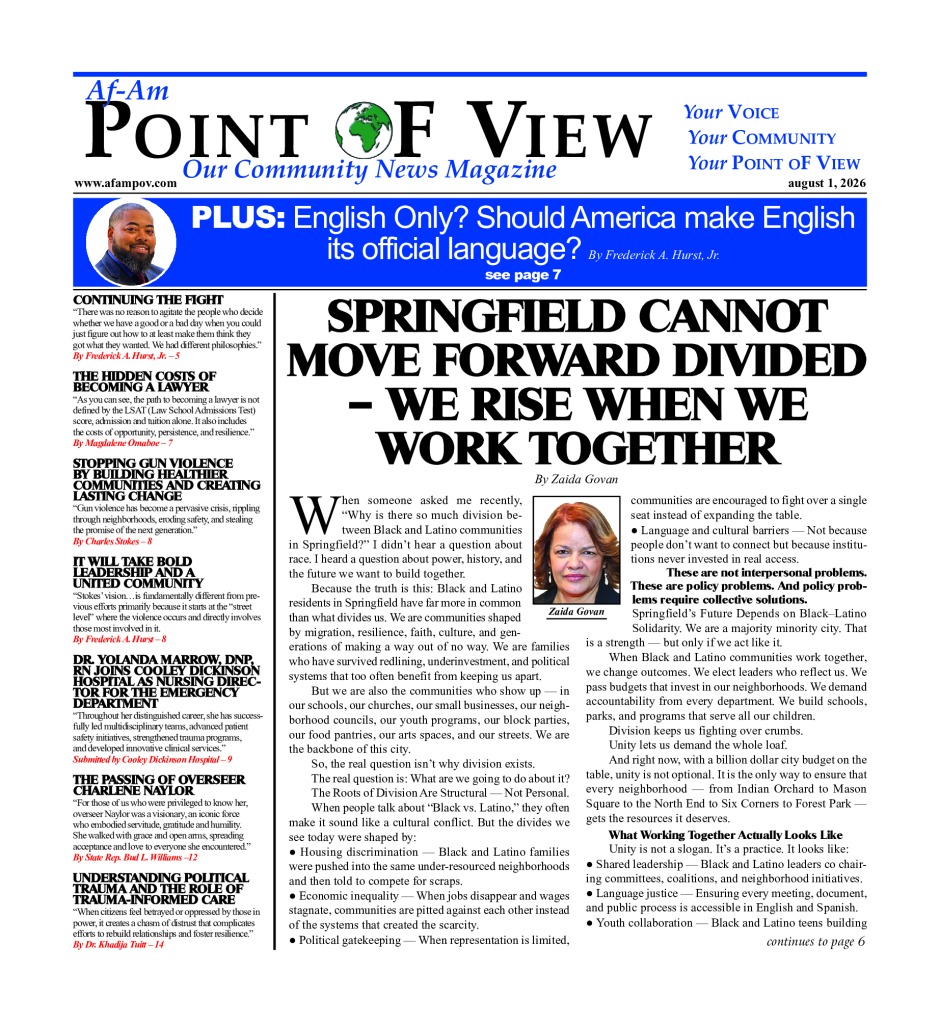
Af-Am Point of View Recent Issues
August 2026
July 2026
June 2026
May 2026
See More Past Issues of Af-Am Point of View Newsmagazine