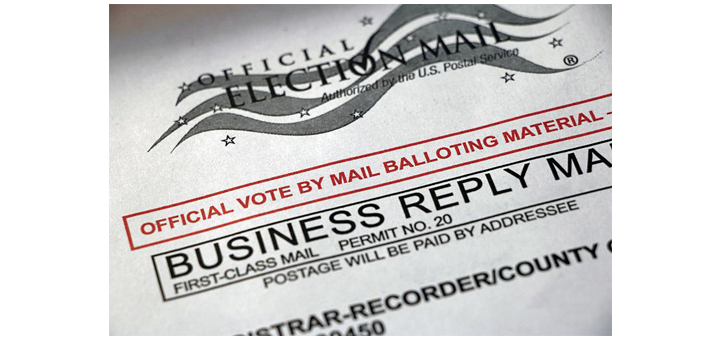
The spectacle unfolding in the federal court case, League of Women Voters of Massachusetts v. Trump, over Executive Order 14399 on August 7, 2026 is less about arcane administrative law than about time and how fragile democratic processes become when powerful actors treat elections as a fast-moving policy deadline. The dispute over the Trump administration’s bid to create a federal “confirmed citizen” database and to tie USPS mail-ballot rules to that database should worry anyone who cares about orderly, fair elections.
At first blush, the government’s argument sounds procedural and reasonable: don’t let courts enjoin agencies for actions they haven’t yet taken; wait for a final rule and a concrete injury. That argument rests on important jurisdictional pillars: standing, ripeness, and the requirement that courts avoid hypothetical disputes. But elections are not parallel parking. They are deadlines hardwired into law and civic life. When the administration gives itself tight timelines to build new systems, then threatens to alter how millions of ballots are handled shortly before voters cast them, the normal sequencing of administrative action and judicial review can be weaponized to make rapid change effectively irreversible.
The plaintiffs in this case are not partisan operatives; they are civic groups, the League of Women Voters, AARO, the U.S. Vote Foundation, OCA, Delta Sigma Theta Sorority, Inc., whose central mission is to help people participate in the franchise. Their complaint is concrete: uncertainty about voter-qualification rules already hampers their ability to educate and assist voters. In election law, “wait until harm occurs” is often no remedy at all. If a voter is told one thing three days before an election, relies on that advice, and is later disenfranchised by a last-minute rule, courts cannot unring that bell.
The legal wrinkle here is exacerbated by an unusual fact: a court previously found the underlying executive action unconstitutional. That is not a minor detail. If an executive directive stands but remains unimplemented only because of delay, whether self-imposed or caused by litigation, the government’s plea to wait until a final rule exists risks a circular defense of its own inaction. More practically, it invites what the judge rightly worried about: imposing far-reaching changes for the November election that no one has had time to test, explain, or litigate.
There are real policy dangers in a rushed federal citizenship database being grafted onto state voter lists. Federal and state records do not always match: name changes, moves between states, data-entry errors and differing update cycles can create mismatches that disenfranchise lawful voters. Conditioning mail-ballot delivery on federal verification risks turning the Postal Service into a gatekeeper over ballots, with disproportionate harm to rural and remote voters who rely on mail voting.
The proper resolution is not an ideological veto of efforts to secure elections. Reasonable integrity measures that respect state primacy in election administration and that are implemented with time, transparency, and testing can strengthen confidence in results. But the law also recognizes that timing matters. Courts should be especially wary of allowing major electoral changes to take effect in the run-up to an election when the administrative process and judicial review would be crippled by the calendar.
If democracy is to be both secure and accessible, changes must be deliberate, not tactical. The principle of lawful administrative process exists to prevent power from being exercised in the twilight before an election. Preserving that temporal buffer is not obstructionism; it is protection of voters, civic organizations, and the rule of law itself. ■
Recent Stories
-
Springfield Museums Summons All Spirits to ‘Spellbound’
SPRINGFIELD — The Springfield Museums will welcome guests to an alluring evening of art and intrigue at Spellbound: Fall Fundraiser 2026 on Thursday, October 22, from 6 to 8:30 pm. The 21+ event will celebrate the reopening of the George Walter Vincent Smith Art Museum following an extensive restoration project while raising funds to support…


Upcoming Events
[tribe_events view=”photo” tribe-bar=”false” events_per_page=”2″]
Af-Am Point of View Recent Issues
November 2026

October 2026
September 2026
August 2026
See More Past Issues of Af-Am Point of View Newsmagazine