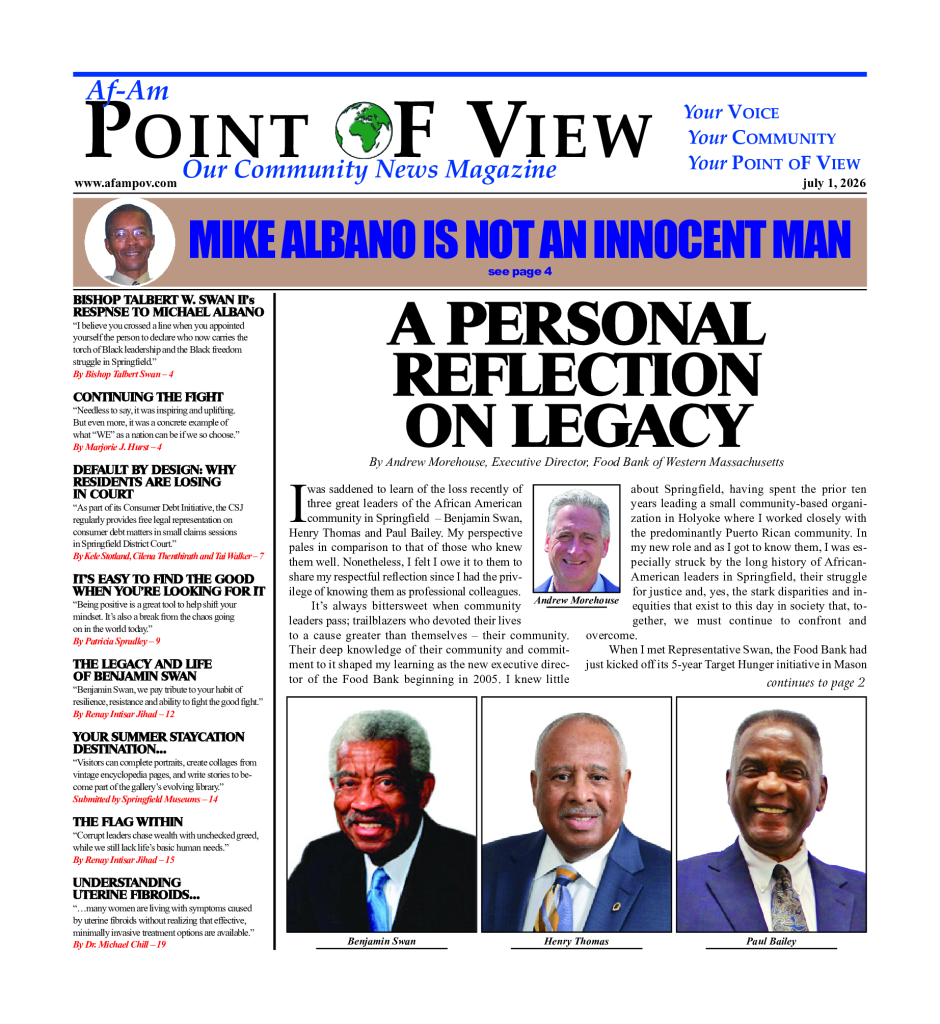
I was saddened to learn of the loss recently of three great leaders of the African American community in Springfield – Benjamin Swan, Henry Thomas and Paul Bailey. My perspective pales in comparison to that of those who knew them well. Nonetheless, I felt I owe it to them to share my respectful reflection since I had the privilege of knowing them as professional colleagues.
It’s always bittersweet when community leaders pass; trailblazers who devoted their lives to a cause greater than themselves – their community. Their deep knowledge of their community and commitment to it shaped my learning as the new executive director of the Food Bank beginning in 2005. I knew little about Springfield, having spent the prior ten years leading a small community-based organization in Holyoke where I worked closely with the predominantly Puerto Rican community. In my new role and as I got to know them, I was especially struck by the long history of African-American leaders in Springfield, their struggle for justice and, yes, the stark disparities and inequities that exist to this day in society that, together, we must continue to confront and overcome.
When I met Representative Swan, the Food Bank had just kicked off its 5-year Target Hunger initiative in Mason Square. I met with him to describe the initiative and seek his support. I was immediately struck by his wisdom. He was a fervent advocate on Beacon Hill for all kinds of policies and investments to improve the lives of his constituents, including the Massachusetts Emergency Food Assistance Program (MEFAP) that continues to be the single largest source of nutritious food of the Food Bank to our region’s food assistance network.
In Springfield alone, there are19 partner food pantries and meal sites as well as nine Mobile Food Banks and seven Brown Bag: Food for Elders sites in partnership with other community organizations. Combined, these sites provide every month the equivalent of more than 349,000 meals to more than 27,000 people. Representative Swan was an early builder of this network. He understood you had to take action to get things done.
One of our early partners was the Springfield Urban League. This is how I met long-time CEO/President Henry Thomas III who understood the importance of food security for seniors through his steadfast partnership with one of the largest of our region’s 51 Brown Bag sites. Henry taught me that the Food Bank must share access to funding resources from the broader region. Thanks to his partnership, today the Urban League/Dunbar Center/Mt. Zion Baptist Church site serves 153 elders every month.
I met Paul Bailey as the CEO of Springfield Partners for Community Action (SPCA) – an anchor institution in Mason Square. He and I tried to convene the region’s four community action agencies to explore regional collaboration. This effort didn’t last long as I learned then, and continue to witness, given the limited capacity of non-profit organizations to take on organizing and advocacy. Instead, Paul was pivotal in introducing me to his senior staff, including the late Synthia Mitchell, who soon after became the steering committee co-director of the Springfield Food Policy Council, established in 2009. Thanks to Paul, Synthia (and co-director Jan Denney of New North Citizens Council) led the Springfield Food Policy Council in its early years with support of then Food Bank coordinator Chelan Brown, who coincidentally now serves as SPCA Director of Community Services. And the Springfield Food Policy Council presses on today under the leadership of Liz O’Gilvie.
The legacies of Ben Swan, Henry Thomas and Paul Bailey live on in the people they touched and inspired, and the places – veritable community institutions – they helped build. They, and other community leaders, have taught me that collaboration, organizing and even collective action are not only possible, but necessary. Each of our organizations must do the work in our own way, but we must do it together.
At the Food Bank, we focus on food insecurity, yet we understand that the multiple drivers of food insecurity are tightly woven into social systems in the United States and are interconnected. Systemic change is necessary to build lasting food security and community wellbeing. As a coalition, non-profits, community groups, and people with lived expertise must advocate for public policies that address the systemic causes of food insecurity, including poverty and discrimination in all its forms. Community-driven people seek community-driven solutions that reflect the diversity of needs, strengths, and perspectives in our region.
Now more than ever, we must stick together and support the legacy of these great community leaders and the next generation of community leadership. ■

Recent Stories
-
Free Summer Eats Meal Program Returns to Springfield to Keep Kids and Teens Nourished All Summer Long
With the school year having ended on June 23rd, Chartwell K12, Springfield Public Schools, and Home Grown Springfield are helping ensure that no child goes hungry this summer through the Summer Eats Free Meals Program.


Upcoming Events
[tribe_events view=”photo” tribe-bar=”false” events_per_page=”2″]
Af-Am Point of View Recent Issues
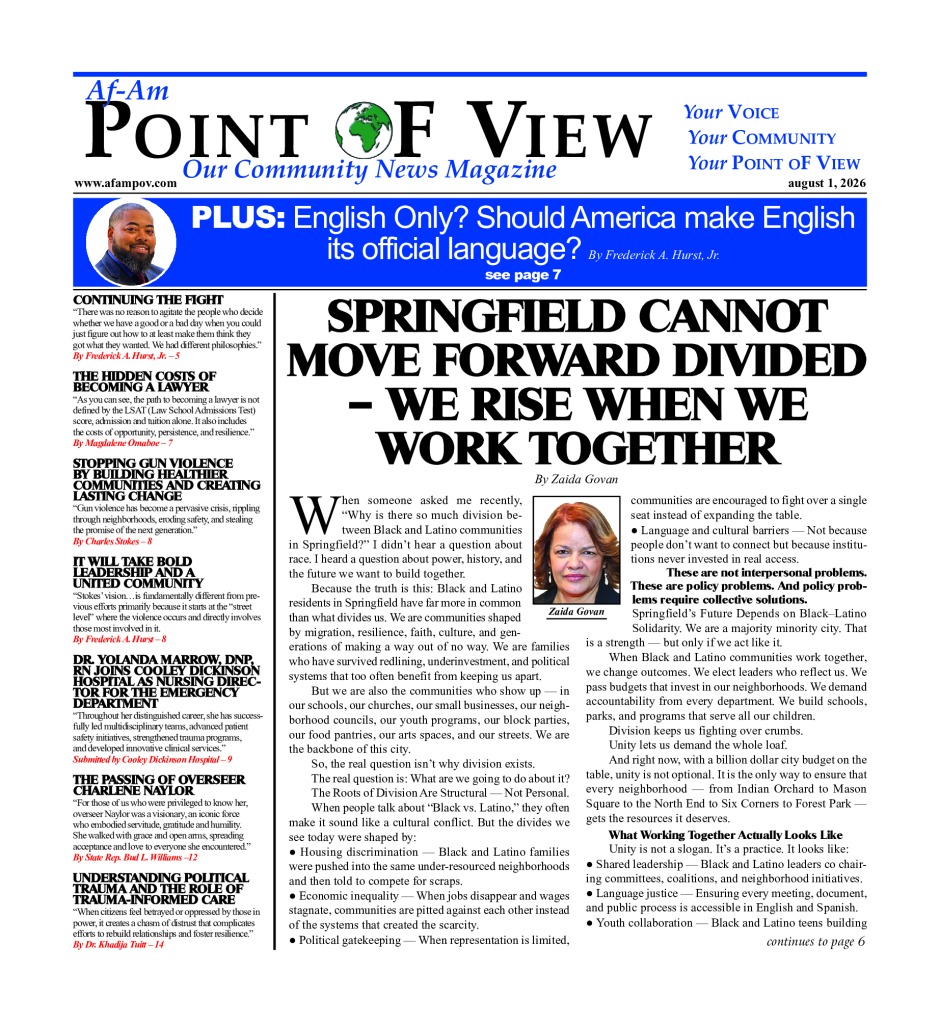
August 2026
July 2026
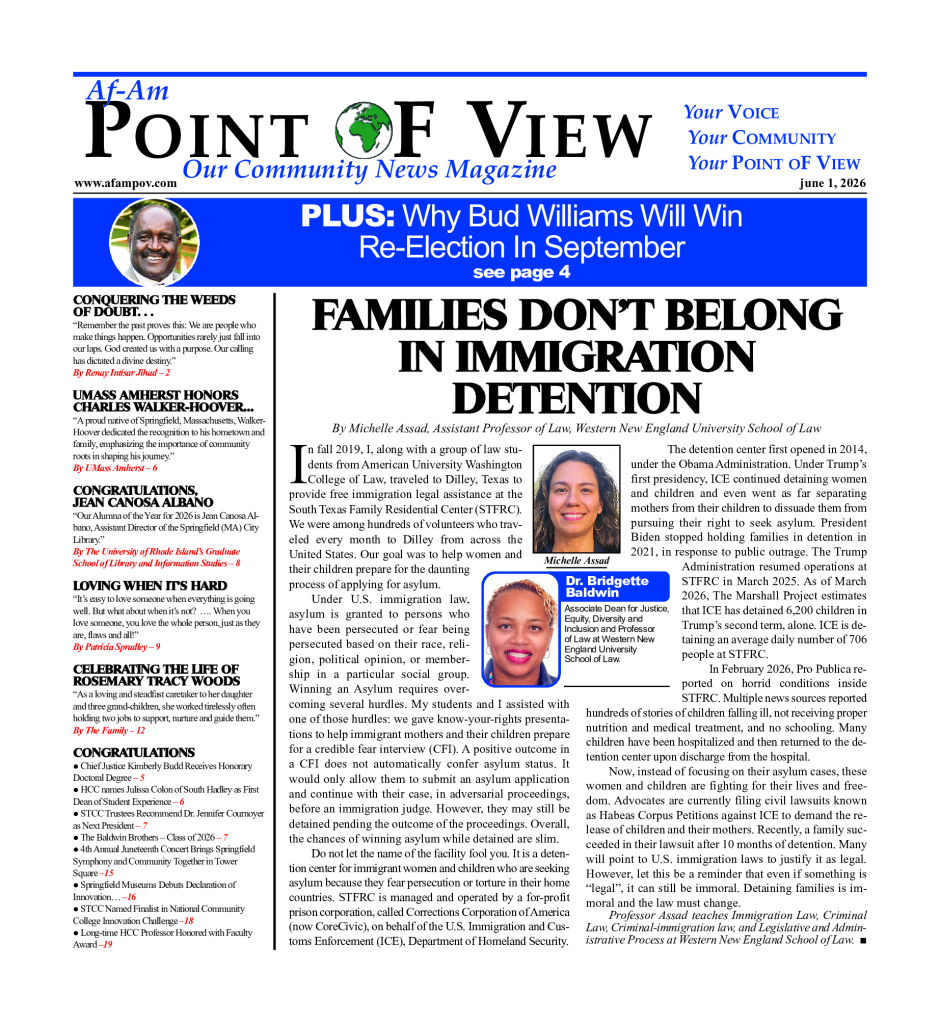
June 2026
May 2026
See More Past Issues of Af-Am Point of View Newsmagazine