There’s an ongoing project at Springfield College that is focused on learning from the histories of Puerto Rican families in the City of Springfield. In the spring of 2024, a conference titled Fostering Inclusion and Equity in Latina/o Children and Families in Their Welfare in the Greater Springfield Area will be held. The conference will call for personal and professional accounts toward the resolution of the multitude of problems that beset our community. The conference will focus on viable practice and policy solutions.
As an alum of Springfield College, I am delighted with their participatory, inclusive approach to developing the conference and the goal of incorporating the voice of the community. The objective is to cast a wide net to make sure all voices are heard from the consumer and provider communities, including the faith-based community. This is important to me as a member of the community as well as a practitioner seeking solutions which might be presented.
This month I am sharing a little bit more about what it was like growing up in our fair city in the late 60’s and 70’s as an Afro Latina. As a young Puerto Rican child, going into the public school system knowing only the Spanish language was challenging. I feel like I got a good education from the system because I learned how to love learning and I learned how to speak English fairly quickly. I was a good student and I loved school. In the blizzard of ‘78, I remember going to the bus stop to wait for the bus to go to the High School of Commerce. I waited at the bus stop not realizing school had been cancelled. It was never cancelled in those days. I got home frozen and my brothers laughed at me.
Maybe unfortunately, I grew up a Jehovah Witness so I was sheltered from a lot of things or maybe they kept their eyes shut to reality. As a girl in a Latino household, I was never allowed to leave the house to find out what was going on. In school, I don’t remember hearing much about any social justice issues that were happening in our city. I participated in the photography club, the newspaper club and the track team among other things. Did I say I loved school? I remember during that time going to the guidance counselor and her telling me that I shouldn’t apply to go to college. I couldn’t understand why she said that. My grades were in the top 10 percentile of all the students, and I knew my grades were more than adequate. Needless to say, I didn’t follow her recommendations and I received a full scholarship to Springfield College.
Due to circumstances beyond the perceived control of a 17-year-old ignorant, love-struck girl, I moved to South Carolina to attend the University of South Carolina in Columbia. Go Gamecocks! I didn’t finish, of course, and that’s a long story for maybe another day. I never got any guidance during that time and made a lot of mistakes. Today, I know that the counselor who advised me not to apply to college did it because I was a first-generation kid from Puerto Rico who she thought didn’t deserve to go to college. Or maybe she thought that I wouldn’t be able to make it through college because of my background. My parents have an 8th grade education combined so that may have been a factor in her decision to advise me the way she did.
In those days Puerto Rican people were looked down upon and we were secluded to the North End of Springfield, maybe by choice. We started living on Orchard Street and ended up on Halsey Street off of Franklin Street. In spite of my parents’ education, they raised 5 children in the city of Springfield. My father worked his entire life for Columbia Bicycle and we were never eligible for public assistance. I am sure my mother would have appreciated some help though. Still, I ended up attending Springfield College many years later on my own dime and have no regrets. My only hope is that the guidance counselors today can identify their own biases and move beyond them and truly help our high school students, especially our Latino and Black students. Telling these stories, I hope will bring light to the resiliency of the Afro Latino people here in the City of Springfield and beyond.
At the risk of repeating myself, communities of color suffer multiple social injustices not limited to those experienced by my family. In the greater Springfield area, Latinas/os, as well as other communities of color, suffer from a wide variety of social injustices. Sadly, we suffered from inadequate housing, poor educational attainment, insufficient access to health care, and other similar adverse experiences. If you feel you are experiencing any of these issues, please seek therapy to help you process what your body is feeling. I’m hoping to be able to tell our history so that we learn from it and don’t repeat it.
As an alumnus of Springfield College, I am proud of their leadership in seeking solutions to the multitude of disproportionate challenges faced by Springfield and surrounding communities as consequences of segregation and poverty. They, and myself as a graduate, are looking for solutions to the deepening chasm existing here in the community that I grew up in. As an elected official on a city level as well as a volunteer at the neighborhood level, I applaud and join with them in their effort to seek and document policy and practice alternatives to ease the burden of fragile and precious children and their families. ■
Recent Stories
-
Free Summer Eats Meal Program Returns to Springfield to Keep Kids and Teens Nourished All Summer Long
With the school year having ended on June 23rd, Chartwell K12, Springfield Public Schools, and Home Grown Springfield are helping ensure that no child goes hungry this summer through the Summer Eats Free Meals Program.

Upcoming Events
[tribe_events view=”photo” tribe-bar=”false” events_per_page=”2″]
Af-Am Point of View Recent Issues
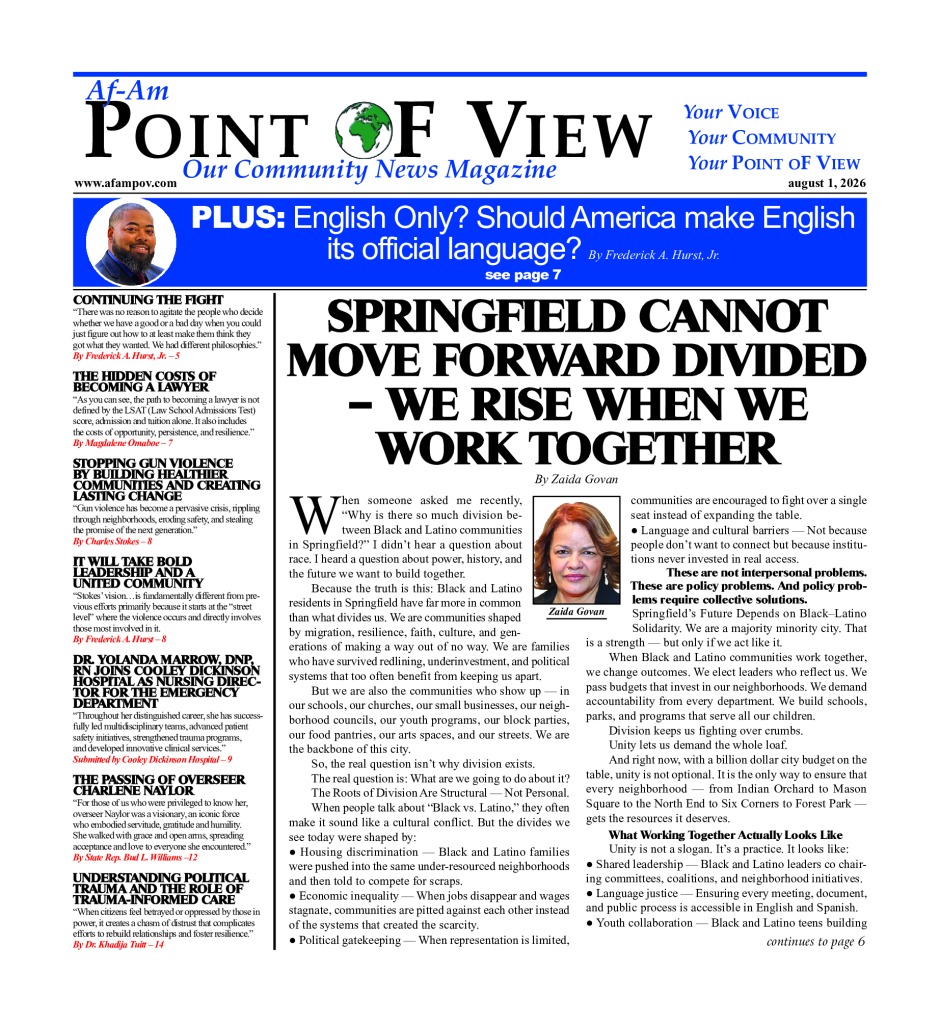
August 2026
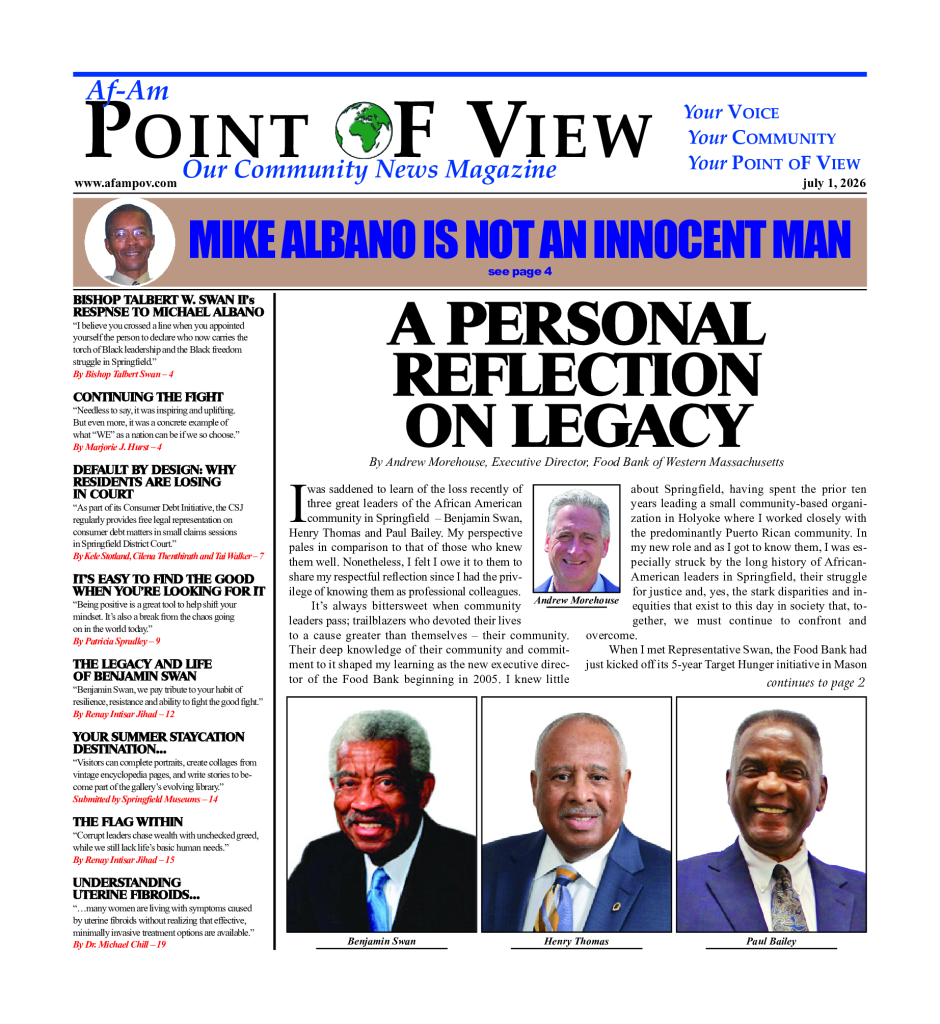
July 2026
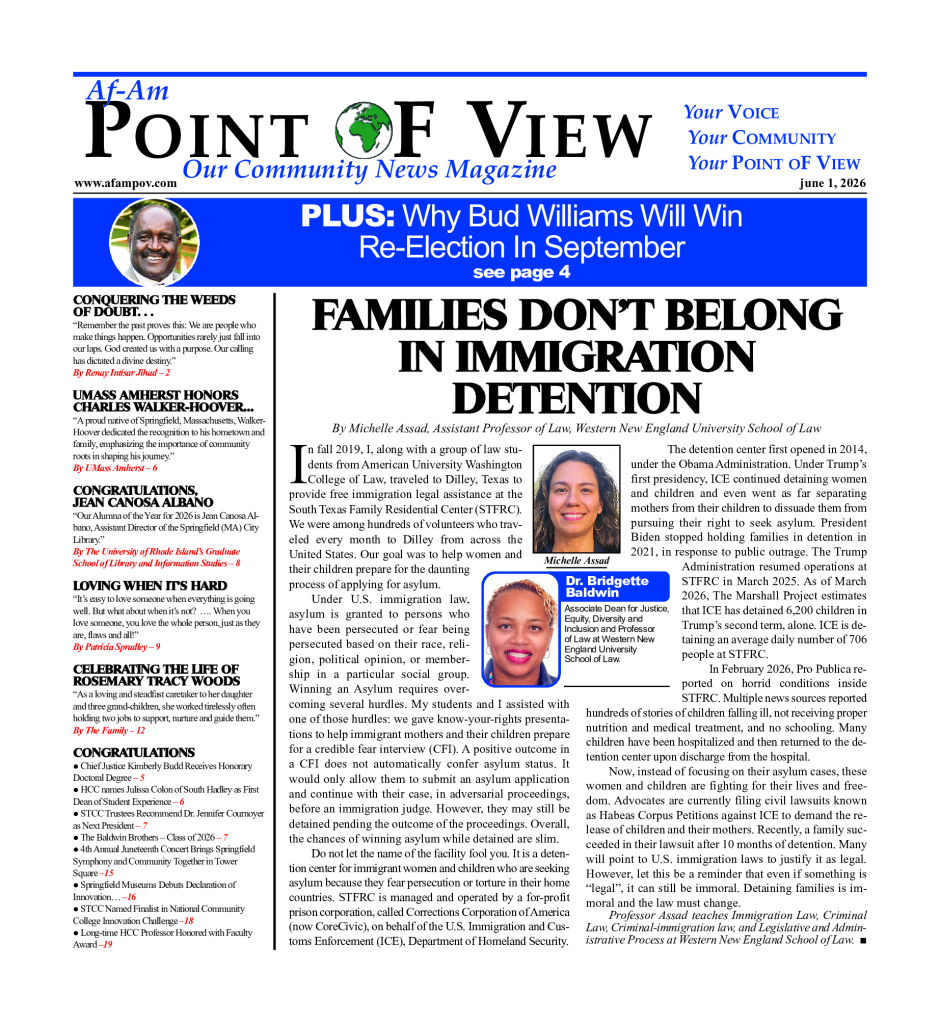
June 2026
May 2026
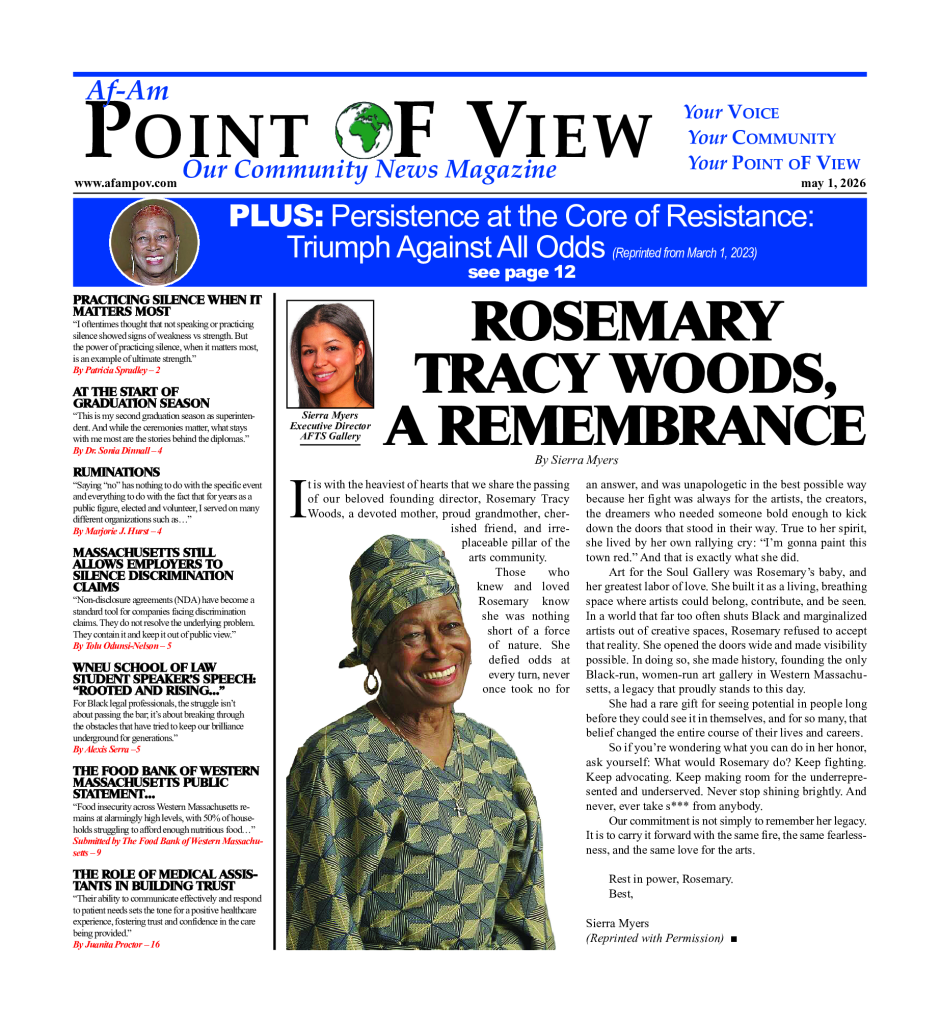
See More Past Issues of Af-Am Point of View Newsmagazine