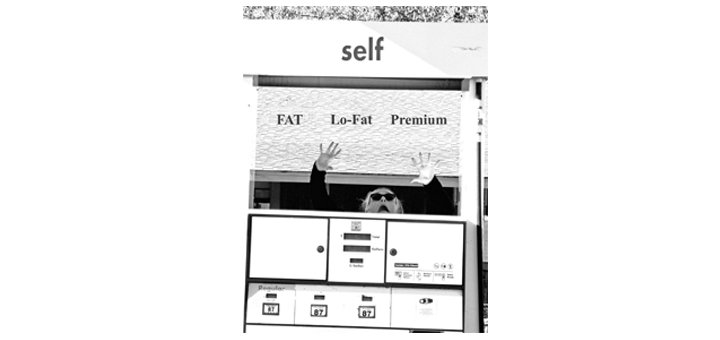
From the time I reached puberty, my mother decided it was time for me to wear a girdle. She was 90 pounds and 4’11” and considered herself gordita, a diminutive form of fat; a term of endearment to some, a compliment to others, a body judgment nonetheless. I, on the other hand, 5’4” with a woman’s body by age 14, was “gordinflona,” a fat bottom and thighs that somehow signaled a moral deficit. “Unattractive” and not ready to be loved by any man, while forced to “clean my plate” hungry or not. Of course, I was also too young to have a “boyfriend” but was expected to be wedding dress ready. Our bodies had been colonized, degraded, conflated with our worth, and shamed. As very young children, we were given baby dolls with bottles, doll carriages, strollers, to prepare us for motherhood. Then, if we got “knocked up,” we were considered “sluts.” Every aspect of growing up female in the 50s and 60s, especially if marriage was considered your only way to success, was heterosexist, patriarchal, and gender stereotyped.
We’ve come a long way since then, but not far enough. Girdles have euphemistic names now, like “body shapers” to help us “smooth out” and there are bras to help us “minimize” or “maximize” breasts. Underwires are de riguer for those of us who are aging, no longer on speaking terms with gravity. Words in mainstream advertising are too often weaponized against our self-esteem. They can carry limitless power. A singular symbol, like the “Swoosh” used by Nike, or a word like Absolut, (unquestioned omniscience? empirical truth?) sells products globally. When women are told to “think like a man,” it is an anemic attempt at “empowerment.” What does “think like a man” really imply? That could be a very effective conversation starter across generations.
Words can do harm by implication, as evidenced in fashion retail marketing tactics that exploit consumers the industry has dubbed “plus size.” Words like “slimming,” “flattening,” “tummy control” and the worst of all, “cover-up,” conjure shame and the idea that one’s body does not meet the standards of “beauty,” is unappealing and in need of fixing. We can “freeze” our fat, or get it sucked out. The core modality of mainstream marketing is to conjure need in the consumer ⸺ a void that whether real or invented, only their product can fill. That need is the hook to the wallet.
Aggressive marketing to women has done unspeakable harm. The too often successful attempts to make us feel inadequate and in need products that will somehow improve us and the quality of our lives, are reprehensible. When clothing shopping, I am especially repulsed by the tern “Cover-Up.” The messaging implies that the consumer’s body is somehow shameful, ugly, unacceptable and in need of being hidden from the eyes of others. What is unacceptable is the on-going shaming of women in advertising. Lizzo is a wonderful advocate and daring activist of body positivity, but why should she have to be? Now there’s a whole new market that’s been created to help us accept our bodies. No matter how you look at it, our bodies have been marketplaces, not always of our choosing, since men misunderstood power as external manifestation, starting with their outdoor plumbing.
I call upon ALL women (if you tell me you’re a woman, you’re a woman, no qualifiers needed) to boycott the vocabulary of body shaming in advertising. Before you purchase any kind of product, read everything carefully to understand how it is being marketed. Are you made to feel ashamed of ANY part of yourself? Does the advertiser make you wish you were different than you are, not as self-determined growth, but as deficit? Does any part of you feel shamed? Does it make you wish you were someone else? Do you feel fat and ugly? Why do you really need a “Cover-Up”? Who and what made you feel that way? Who decides the terms of beauty and why is so-called beauty an expectation in the first place? Perhaps I’m not the right one to ask, as I was charmed by the graciousness of the Elephant Man, his intelligence, compassion, and kindness. And as far as Victor Hugo’s Quasimodo or the Prince, even as a little girl, it was Quasimodo who rang my heart’s bell.
Sometimes the body shaming is familial ⸺ a learned behavior that is passed on cyclically. Although I am focused on women and girls in this article, I’m clear that it happens to boys and men as well. Status-quo marketing has been harming women with patriarchal and white supremacist notions of beauty from whalebone corsets to Spanx; from toxic skin and hair bleaching potions; to foot binding and anything meant to “hold it all in”; make us “smaller”; and keep us in line with the expectations of a society that for lack of questioning and critical thought, is under attack from threats to democracy; to violence born of self-loathing; cross-generational eating disorders; and rising suicides based on internalized feelings of rejection and worthlessness. Words do more harm than “sticks and stones;” they can, and do, harm our mental and societal health.
Refuse to “Cover-Up” anything in your life. It will always find a way to do harm. Let’s change the narrative, by changing how we spend our hard earned money. Less shopping and more celebrating of who we are in this moment. More time encouraging and valuing each other and ourselves ⸺ less covering up, and more showing up and speaking out. Go shopping in each other’s closets, sisters. Celebrate each other. Let’s go out there and jiggle what we’ve got while we still can ⸺ work it out, working out ⸺ for health, vibrancy and the desire to live life to the fullest in all of our fullness.
We can mother each other and ourselves. Mother the Mothers, too; not just on Mother’s Day. Choice. Voice. Rejoice. Our mental health depends on them. ■
Recent Stories
-
Free Summer Eats Meal Program Returns to Springfield to Keep Kids and Teens Nourished All Summer Long
With the school year having ended on June 23rd, Chartwell K12, Springfield Public Schools, and Home Grown Springfield are helping ensure that no child goes hungry this summer through the Summer Eats Free Meals Program.


Upcoming Events
[tribe_events view=”photo” tribe-bar=”false” events_per_page=”2″]
Af-Am Point of View Recent Issues
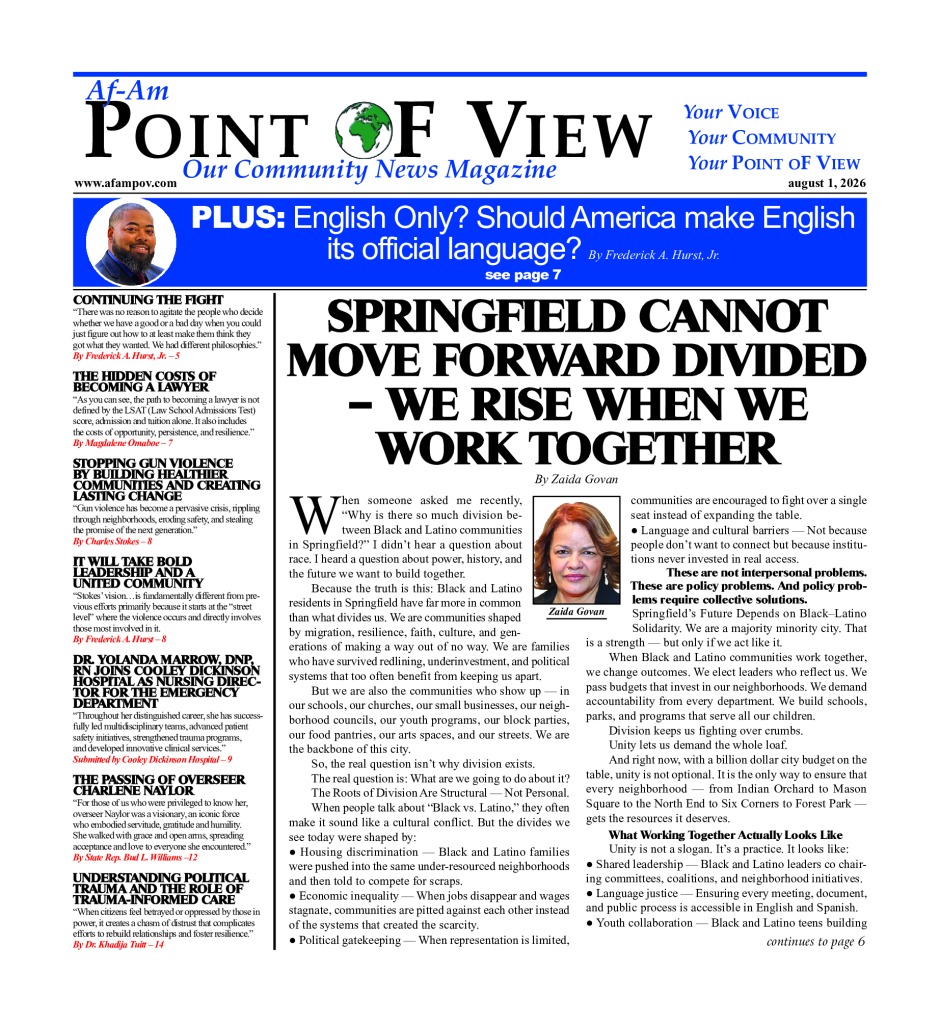
August 2026
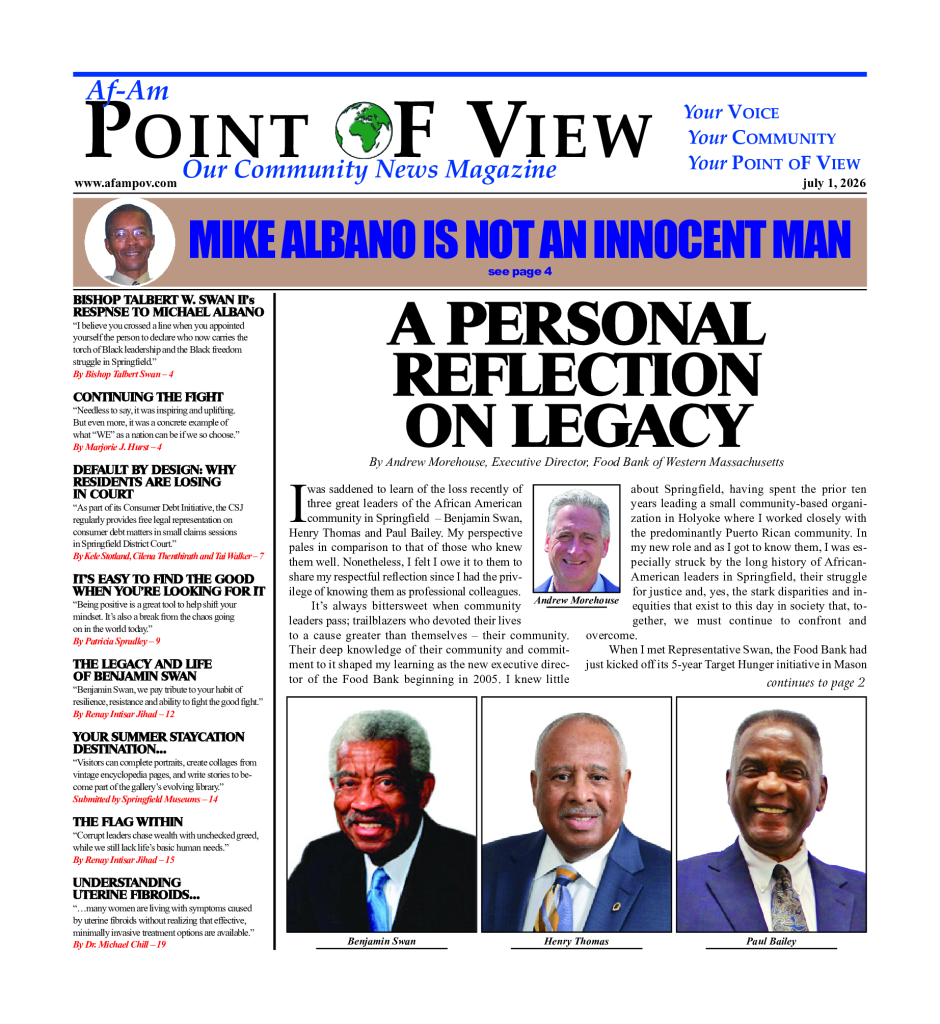
July 2026
June 2026

May 2026
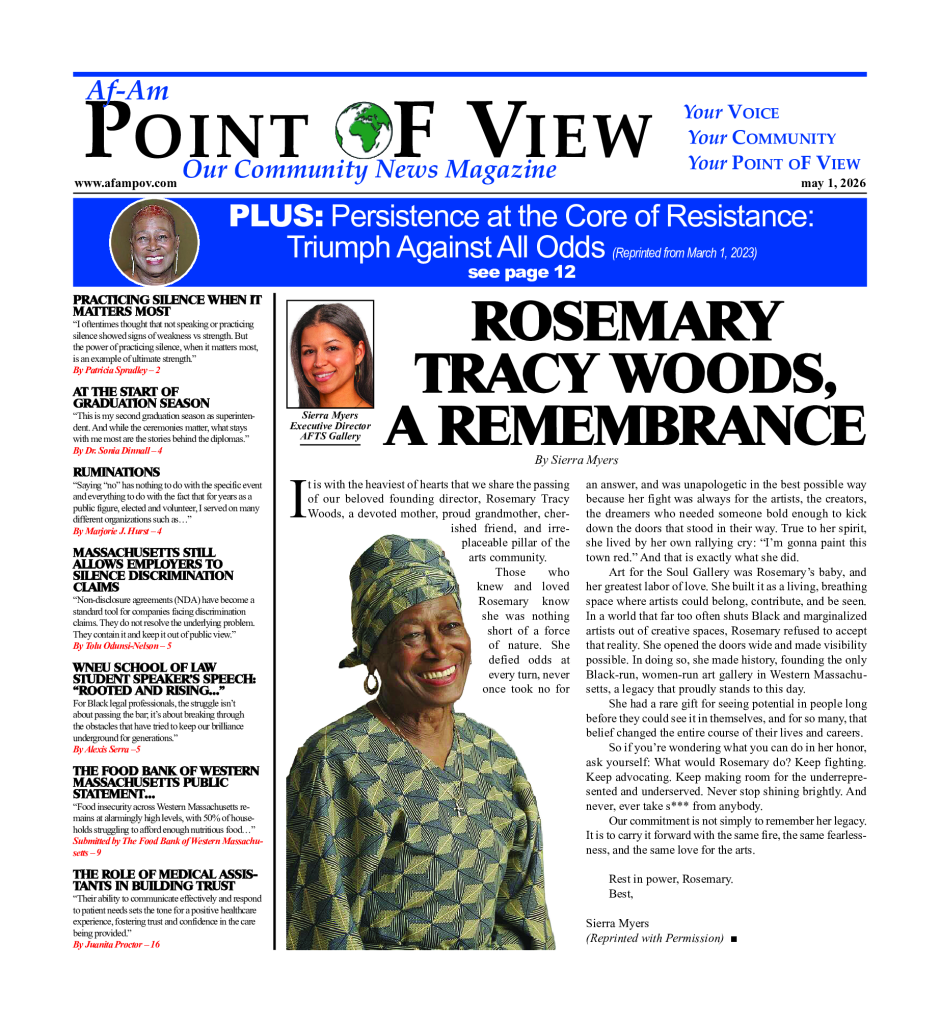
See More Past Issues of Af-Am Point of View Newsmagazine