In October of this year, Elissa Carney, a Springfield native and Holyoke resident, joined my homebirth midwifery practice as student midwife and is now our apprentice.
Elissa’s entry has reminded me of the value of the apprenticeship model. Prior to the dominance of educational institutions for training, apprenticeship was the route for most professions. With direct exposure to local experts, young people could develop skills and knowledge in real life situations.
Historically, midwives, of course, were no exception. They gained their skills directly from the wise women of their community who had seen many pregnancies, labors, and births. In most indigenous communities, midwives didn’t only deliver babies, they also helped treat ailments, sickness and illnesses with herbal medicine and other natural methods. Midwives had no formal title or degree. The trust of the community was their “license” and this trust was gained through years of apprenticeship.
My own midwifery education included training under two elder midwives for two years. I learned how to take vitals, how to assess the heartbeat of the baby in utero, how to measure the dilation of the cervix, how to watch and gauge the progression of labor, how to resolve various complications that could arise, and much more. I had read and studied about many of these skills in the textbooks – but encountering them in reality with mentors was invaluable. In addition, these two midwives were so different from one another in their approach, style and knowledge base, which broadened my skill-set even more.
Apprenticeships are personalized training. Learning can be tailored to the respective strengths and weaknesses of each individual. It also is a less expensive professional route than formal school.
Educational institutions, for the most part, have significant overhead and therefore need to charge their students to learn, often at great cost. Apprenticeship is also based on the premise that knowledge is plentiful, not scarce, and not owned by corporations or government. The skill base of the human race – your family, neighbors, friends – is an untapped source for training. Spots in learning institutions may be limited, but learning from those around us is available to all.
For the last two years, I have been honored to have Laconia Fennell as my midwifery apprentice. She recently caught a baby for the first time and will now be the primary midwife for one of our clients. As she transitions into a role with greater responsibility and works towards her license, we are excited to have Elissa bring her attention to detail, experience as a doula and awareness about informed choice to our practice. Hopefully, she will benefit from the apprenticeship model as much as we have.
In addition to midwifery, I have learned many useful things through formal and informal mentorships. My husband Daniel and I have acquired many practical skills from the wise people of Springfield. Mr. Jarry taught me beekeeping, Ms. Ida Williams taught us about pest control for cabbages, Mr. Juan Brown taught Daniel about basic construction to build our greenhouse, Lorenzo taught us about keeping chickens, Joel started Daniel off on bow-hunting. We feel blessed to be surrounded by this non-institutional knowledge base and would choose it over Harvard University any day. ■

Recent Stories
-
Free Summer Eats Meal Program Returns to Springfield to Keep Kids and Teens Nourished All Summer Long
With the school year having ended on June 23rd, Chartwell K12, Springfield Public Schools, and Home Grown Springfield are helping ensure that no child goes hungry this summer through the Summer Eats Free Meals Program.

Upcoming Events
[tribe_events view=”photo” tribe-bar=”false” events_per_page=”2″]
Af-Am Point of View Recent Issues
August 2026
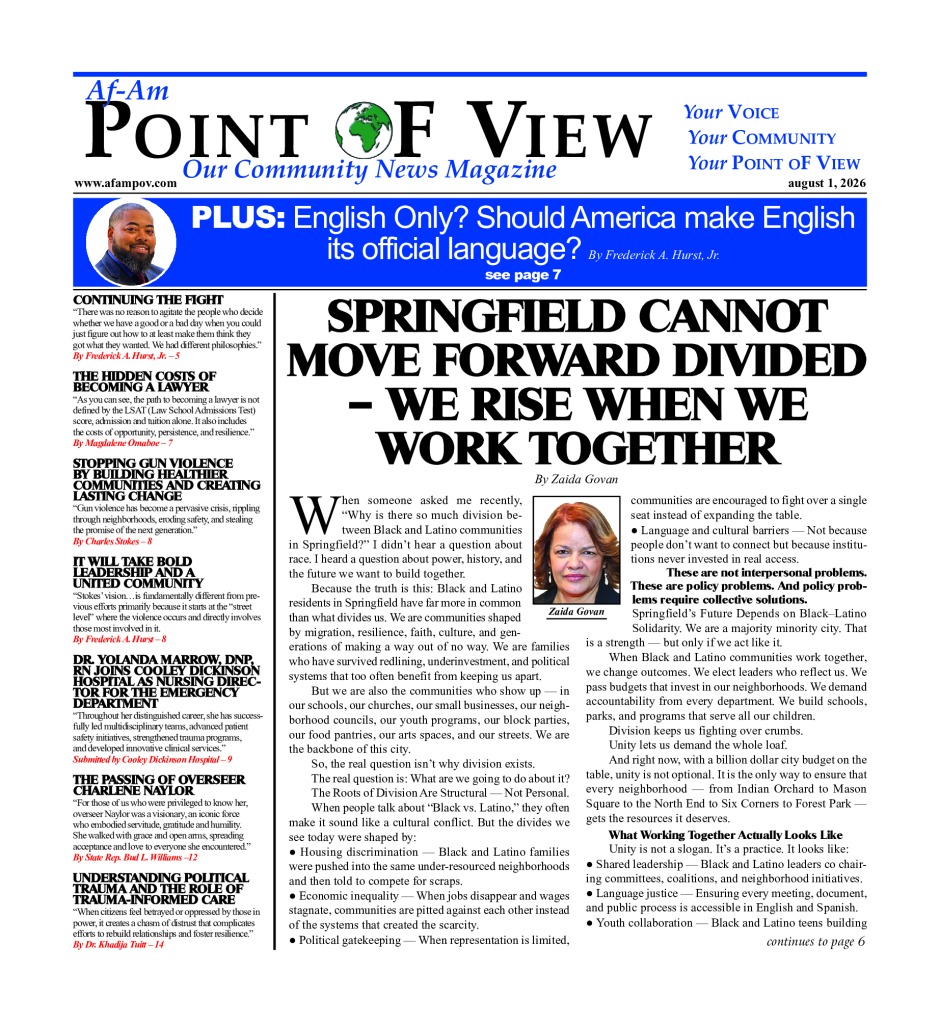
July 2026
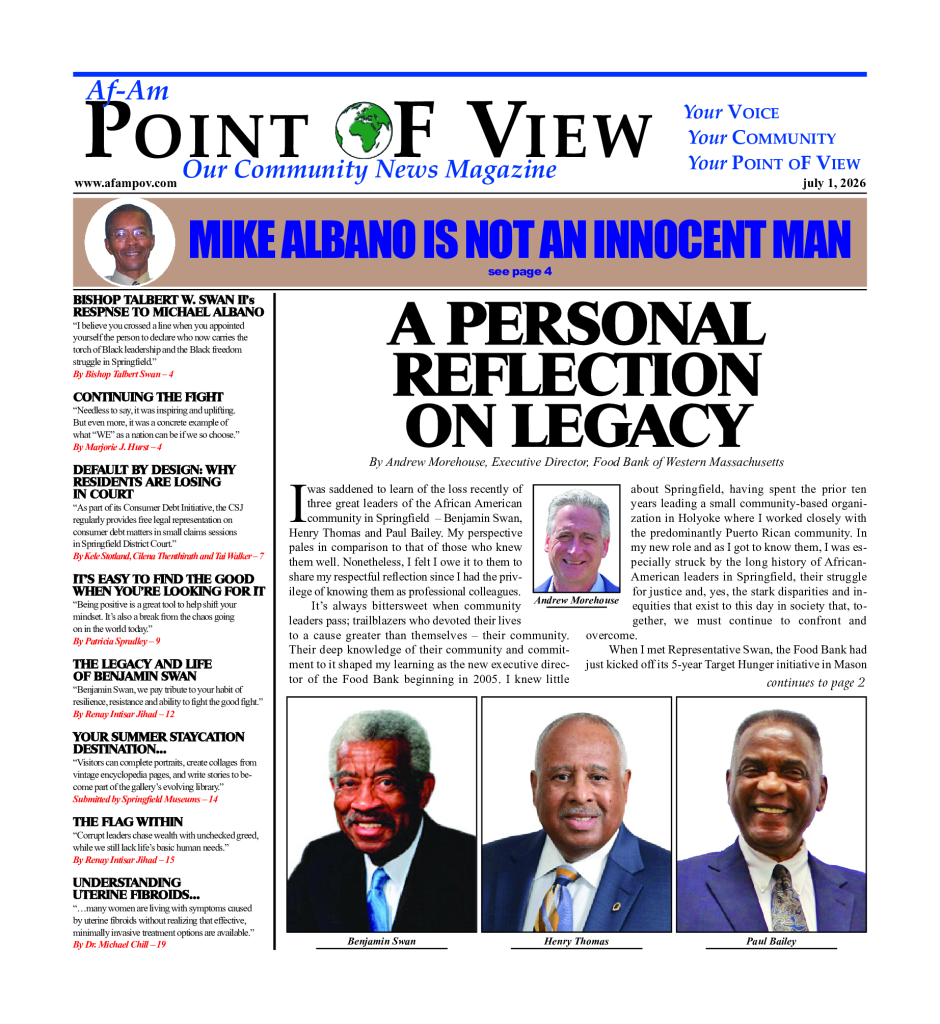
June 2026
May 2026
See More Past Issues of Af-Am Point of View Newsmagazine