
Black History Month is more than a reflection—it’s a call to honor the legacies that shaped us and the artists who continue to push boundaries. The Black Arts Movement was never just about creativity; it was a declaration, a bold act of defiance against erasure. It demanded space where none existed, turning brushes, words, and music into tools of resistance and truth. These pioneers’ voices still echo today, reminding us that art has long been a force for liberation. Their work urges us to keep building, creating, and breaking barriers—unapologetically.
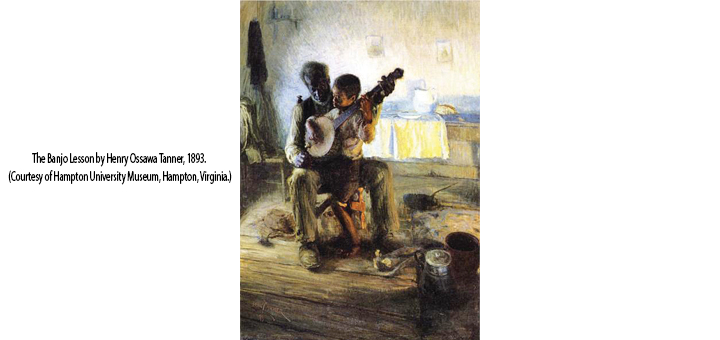
I spent many hours on the steps of the Philadelphia Museum. The museum was my favorite place to hide. It was the first time that I had ever seen any art that represented me, as many call it Black art. It was the work of none other than Philadelphia artist Henry Ossawa Tanner. Please take time to familiarize yourself with his art. His was not only the first artwork that I saw but also the first print of his work that I purchased was The Banjo Lesson.
Henry Ossawa Tanner not only inspired me when I began to create Art for the Soul Gallery but his work has had such an important impact on my entire life. Tanner was the first Black artist to gain international fame. He was instrumental in creating deeply spiritual works, including The Resurrection of Lazarus and The Annunciation. (Sources: National Archives, Philadelphia Museum of Art, The Washington Post)
By continuing the work of Tanner, as well as various pioneers who fought to break down racial barriers, I still connect with his legacy today. Tanner was denied access to exhibitions and other opportunities as an artist because of his race. He, like so many expatriates, fled to Paris because in Paris their race did not matter. Tanner was a political activist, supporting the abolition of slavery. His father was a friend of Frederick Douglass. Tanner has been called ‘the greatest African American painter to date.’ His Sand Dunes at Sunset, Atlantic City (c.1855; oil on canvas) was bought for $100,000 by the White House during the Bill Clinton administration. Mr. Tanner’s works broke down many discriminatory practices for artists. (Sources: National Archives, Philadelphia Museum of Art, The Washington Post)
The Black Arts Movement
(1965–1975)
The Black Arts Movement, born from the shift sparked by the Black Power Movement, redefined creative spaces as tools for liberation and self-determination. Founded in Harlem in 1965 by poet and playwright Amiri Baraka, also known as Everett LeRoi Jones, this movement transformed music, literature, drama, and visual arts into instruments of cultural pride, political resistance, and communal healing. (Source: The Black Arts Movement: Literary Nationalism in the 1960s and 1970s by James Smethurst, National Archives)
Baraka envisioned the arts not merely as forms of expression but as vehicles to dismantle systemic oppression and amplify Black voices. Visionaries like Maya Angelou, Nikki Giovanni, Lorraine Hansberry, and James Baldwin expanded their mediums while challenging injustice—Angelou celebrated Black womanhood, Baldwin confronted racial realities, Hansberry broke barriers on Broadway while confronting race, gender, and identity, and Giovanni captured the pulse of the Civil Rights Movement.
AFRICOBRA and the Continuing Legacy
Art for the Soul Gallery recently honored the late Nelson Stevens, a pivotal member of AFRICOBRA, whose work exemplified artistic excellence, cultural pride, and community empowerment. The movement’s influence endures, emphasizing that art can be a powerful catalyst for social change.
Art for the Soul Gallery welcomes Richard Johnson, Jr., a Springfield-based visual artist who has been appointed to its Board of Directors, bringing his passion for creative expression as a tool for personal growth and empowerment. His work focuses on using art to educate, heal, and inspire—values he has upheld through his nonprofit, Chess Angels Promotions Inc., which mentors youth and strengthens community wellness through arts-based programs.
Known for his “Soul Food Art” style—bold silhouettes paired with cultural storytelling—Johnson’s work encourages viewers to explore their identities and experiences. His influence grew from mentoring young people in self-expression and communication through art. Now, as a board member, Johnson plans to expand his impact with projects like the upcoming Malcolm X community mural and education initiative for Black History Month, continuing to use art to inspire dialogue and celebrate culture.
As Art for the Soul Gallery transitions into a new chapter, we remain committed to advancing equity for all and breaking down racial barriers in cultural institutions. We will continue to uphold our Mission Statement: ‘To educate, inspire, and uplift the community through diverse artistic expression while advocating for cultural representation and inclusion in the arts.’ ■