President Trump’s second term in office has been marked by tension and debate over the balance of power among the three branches of government. During this term, his administration has significantly expanded the reach and scope of the executive branch, challenging the well-established principles of the separation of powers. Additionally, the President’s often harsh and personal criticism of judges and judicial decisions raises significant threats to both the safety of courts and judges, as well as the independence of the judiciary. In these tumultuous and challenging times, it is critical to keep in mind the underlying constitutional principle of separation of powers, established to prevent the concentration of power in one person or a small group—an essential safeguard against authoritarianism or dictatorship.
The U.S. Constitution establishes three co-equal branches of government—legislative, executive, and judicial—each with distinct responsibilities and a system of checks and balances designed to prevent the concentration of power in any one branch. According to the Constitution, the legislative branch is responsible for enacting laws and appropriating the funds necessary to operate the government. The executive branch is responsible for implementing and administering the public policies enacted and funded by the legislative branch. The judicial branch is responsible for interpreting the Constitution and laws and applying these interpretations to controversies within its purview; it is meant to function independently, interpreting and applying the law without influence from the executive or legislative branches. A fundamental premise of our system of government is that an independent judiciary is essential for upholding the rule of law.
Despite these well-established principles, the extensive use of executive orders that circumvent constitutional rights and protections has become a hallmark of this administration. An executive order is a directive from the President that manages operations of the federal government. These orders, while having the force of law, do not require Congressional approval and can be revoked by the President at any time. Executive orders must be grounded in the Constitution or a statute passed by Congress.
During this term, President Trump has signed a record number of executive orders—163 to date—to reshape the federal government and implement policy priorities. In fact, just a few months into his presidency, he has already signed more executive orders than President Biden did in four years. Many of these orders are facing legal challenges, with judges blocking them, thus raising questions about their validity and constitutionality. The website, Just Security, an independent law and policy journal, tracks these legal challenges: https://www.justsecurity.org/107087/tracker-litigation-legal-challenges-trump-administration/
As evidenced by recent court decisions, many of these executive orders exemplify executive overreach, blurring the limits of presidential power and challenging the separation of powers among the three branches of government. Executive orders can be challenged in court and potentially overturned, invalidated, or modified. The administration has also challenged the authority of the judiciary by criticizing and ignoring court orders, delaying or attempting to circumvent them, and filing emergency appeals to the Supreme Court. Many legal experts argue that these actions represent an unprecedented challenge to the separation of powers and the independence of the judiciary. The separation of powers among the three branches of government and the independence of the judiciary are essential hallmarks of the constitutional democracy of the United States. For additional information about the U.S. government, visit: https://www.nps.gov/articles/000/civics-101-principles-of-american-government.htm ■

Recent Stories
-
Free Summer Eats Meal Program Returns to Springfield to Keep Kids and Teens Nourished All Summer Long
With the school year having ended on June 23rd, Chartwell K12, Springfield Public Schools, and Home Grown Springfield are helping ensure that no child goes hungry this summer through the Summer Eats Free Meals Program.


Upcoming Events
[tribe_events view=”photo” tribe-bar=”false” events_per_page=”2″]
Af-Am Point of View Recent Issues
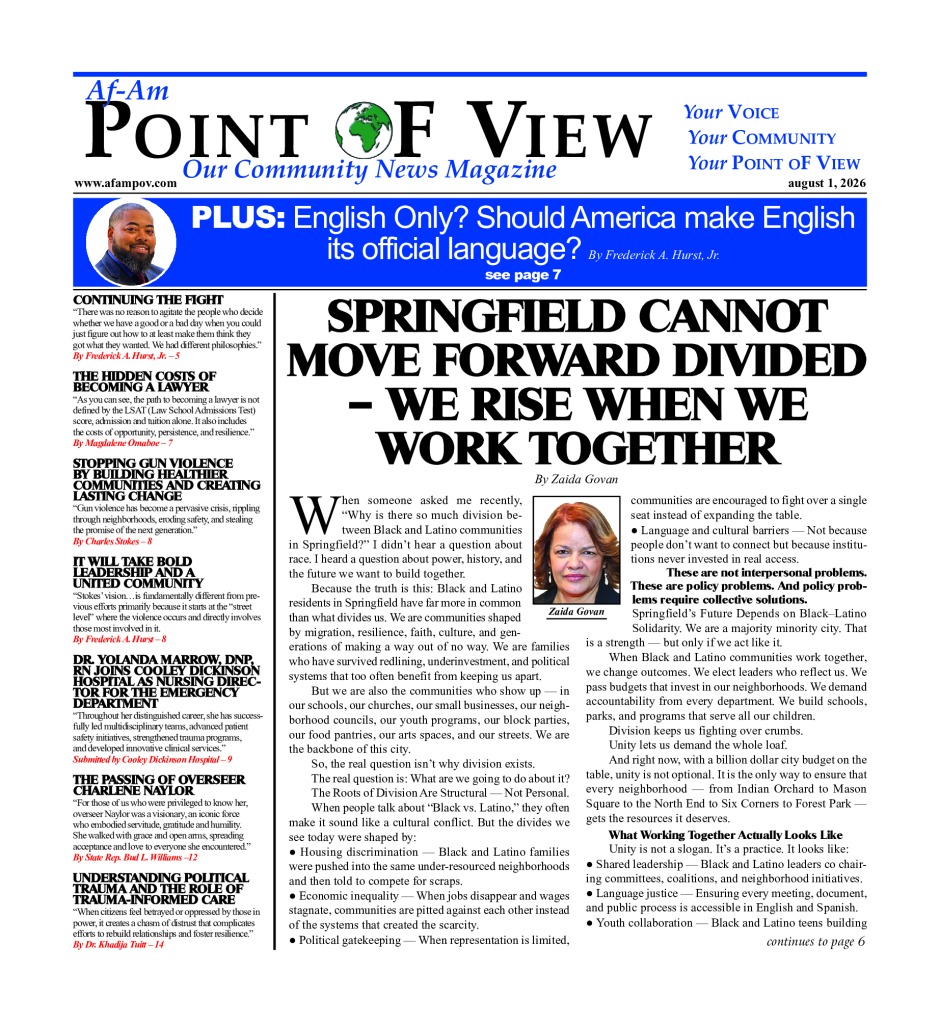
August 2026
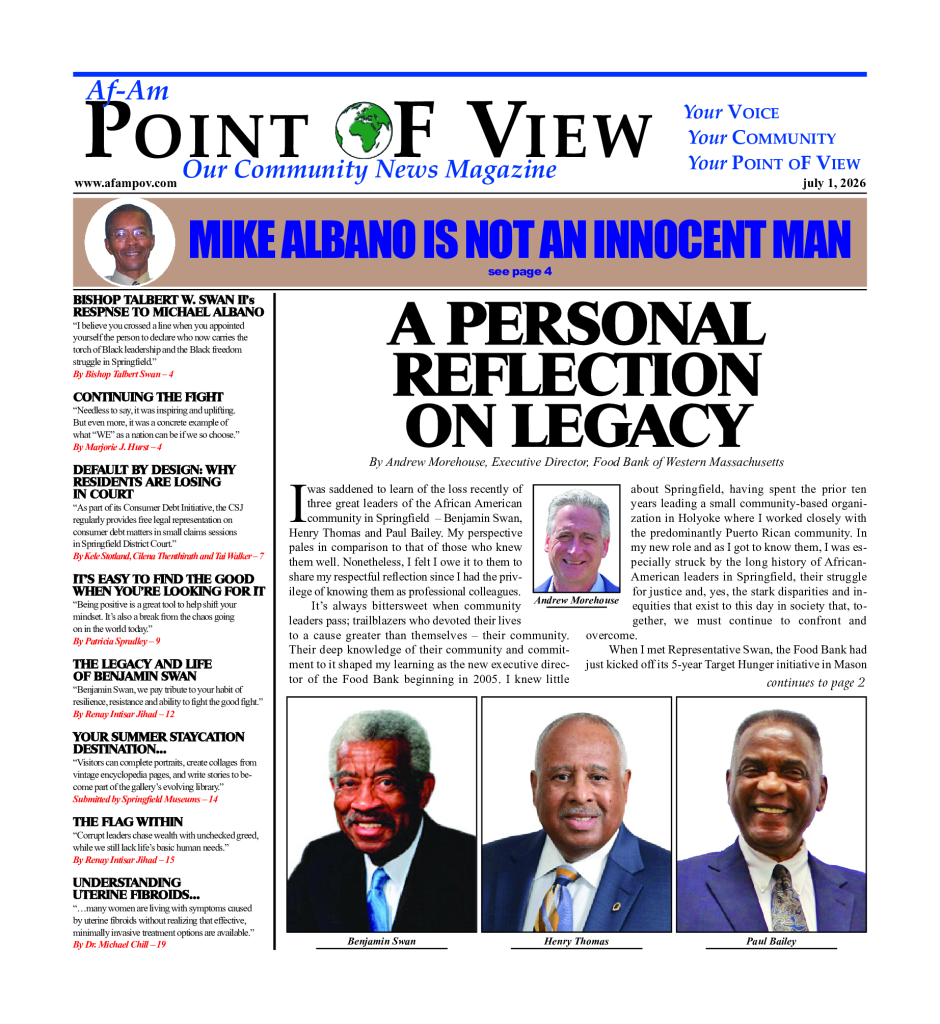
July 2026
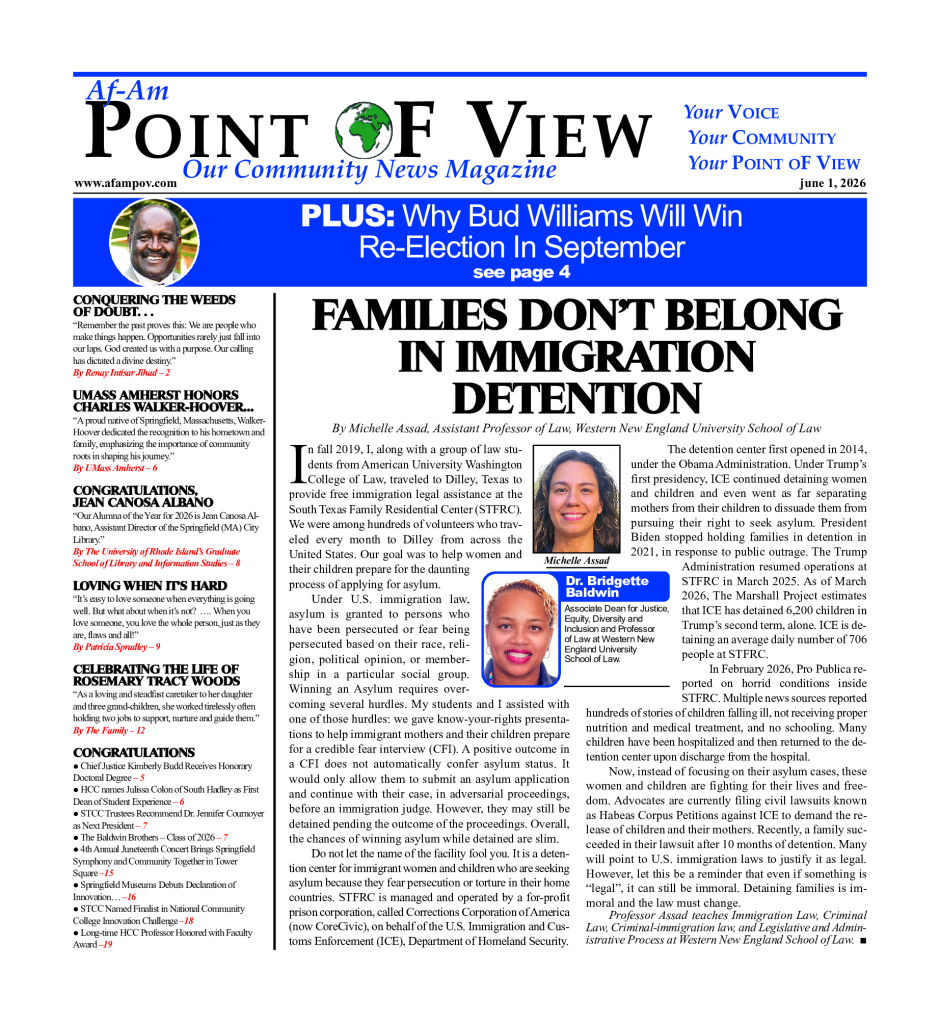
June 2026
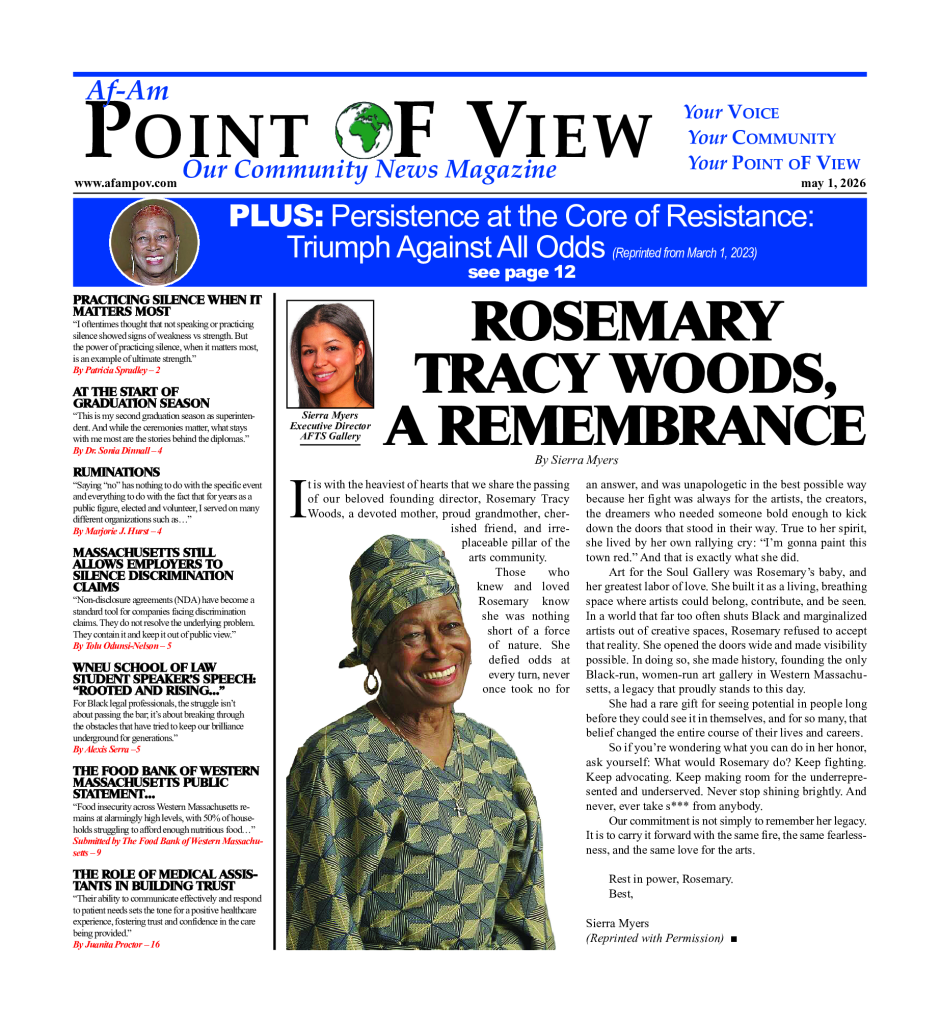
May 2026
See More Past Issues of Af-Am Point of View Newsmagazine