
When ethics becomes selective and public judgment moves faster than due process, Springfield must ask who is defining integrity and who is being defined by it.
In Springfield, the public has been told to see one official as the problem and another as the solution.
On one side is City Council President Tracye Whitfield, the first Black woman to lead the council, now accused of repeatedly violating conflict of interest laws in connection with a family run development company and her advocacy for a constituent. On the other is City Solicitor Stephen J. Buoniconti, the city’s top lawyer, whose memo has been treated by many outlets as a final verdict rather than what it is, one lawyer’s aggressively framed brief in a political struggle. Buoniconti’s Own Ethics Record
What most residents are not being told is that Buoniconti has his own history with ethics and professional discipline, a pattern of attacking others’ integrity while minimizing scrutiny of his own record.
In 2016, the Massachusetts Board of Bar Overseers issued a public reprimand against Buoniconti for forging his then wife’s signature on loan and closing documents without authority and then lying to opposing counsel about it. The discipline order found that he engaged in fraud, deceit and misrepresentation and that his conduct adversely reflected on his fitness to practice law.
Go back further. During his 2010 run for Hampden County district attorney, Buoniconti attacked opponent Mark Mastroianni for being a defense attorney who represented notorious gangsters and criminals, only to admit days later that he himself had quietly taken on criminal defense work over the previous decade. That work included representing defendants charged with assault with dangerous weapons, unarmed robberies, witness intimidation, DUI and threats to commit murder. As Mastroianni put it at the time, there was already a pattern of Steve Buoniconti telling the public one thing and then the public finding out something totally different.
That same year, while serving full time as a state senator, Buoniconti quietly collected more than one hundred thousand dollars as lawyer for the Hampden County Regional Retirement Board, a public job he failed for years to disclose properly on his state financial forms. He reported the income as private legal fees even though the pension board is a public entity. He only asked for a formal ruling after the press questioned him and an ethics complaint from a widow landed on the commission’s desk. She accused him of a conflict of interest in denying her full pension while he was both her senator and the board’s lawyer.
Media’s Uncritical Amplification
That history does not automatically disqualify Buoniconti from raising concerns today. It does, however, dismantle the simplistic narrative that casts him as a neutral and unimpeachable referee of everyone else’s conduct. When a lawyer who has been formally reprimanded for dishonesty, questioned over his own disclosures and caught misleading voters about his professional record is elevated as the singular voice of good government against a Black woman council president, the public deserves the full context.
Yet that context has been largely absent from mainstream coverage.
Television headlines have told viewers that Whitfield repeatedly violates conflict of interest laws as if the State Ethics Commission has already ruled. Radio and online stories lean heavily on phrases such as tainted vote, troubling pattern and over and over again, almost all drawn directly from the solicitor’s memo. They catalog every email, every meeting and every auction in vivid detail while Whitfield’s responses are compressed into brief references to mistakes and lessons learned.
That is not balance. It is a public prosecution carried out in headlines.
Missing Comparisons and Context
Crucial questions remain unasked. How many other councilors or mayors have business interests that intersect with city processes. How often have white officials participated in auctions or had family members connected to city contracts and how were those situations handled. Are late or incomplete disclosures typically treated as correctable errors or are they elevated to memos and media blitzes only when certain people are involved.
Race is not incidental here. Whitfield has stated plainly that she believes she is being targeted because she is the first Black female City Council president. That claim has been quoted but rarely examined. There is little reporting that connects this case to the broader racial history of discipline in Springfield politics, to previous conflicts over policing and the Nathan Bill’s case or to the way Black economic initiatives are scrutinized compared to white ones.
Instead, a familiar script appears. When Black aides such as Darryl Moss challenge the administration, their social media is combed for language that can be interpreted as threatening. When Black leaders build wealth through property ownership, their actions are scrutinized for abuse of power while the people conducting that scrutiny are portrayed as beyond question.
Trial Without a Judge
Whitfield has acknowledged that she should have recused herself sooner, sought guidance and pledged to tighten her practices. No independent body has yet concluded that she violated ethics law. Nevertheless, she faces the full weight of the city law department, the possibility of state review and a relentless public narrative that speaks in the language of violations rather than allegations.
Buoniconti survived his own ethics controversies, including a public bar reprimand, disclosure lapses and campaign misrepresentations, and was ultimately entrusted with the authority to define integrity for others.
If Springfield residents truly care about ethics, they must demand it in both directions. That means examining not only whether Whitfield crossed any lines but also whether the city’s ethics machinery and the media that amplify it are being applied evenly, transparently and without racial or political retaliation. It means insisting that those who lecture others on conflicts of interest be held to the same standard of candor and accountability.
And it means recognizing that when a Black woman president is tried in the court of public opinion by institutions that have forgiven their own, justice will not be served by silence. ■
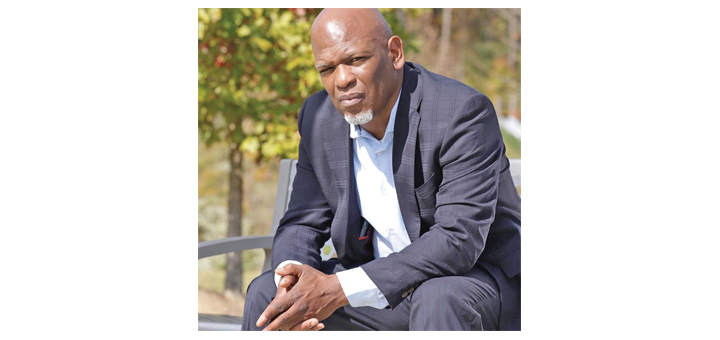
Darryl E. Moss
The Metro Record Newspaper
470.210.8105
dmoss@themetrorecord.com