When the Trump Administration speaks about violence against Christians in Nigeria, the language is unmistakably moral. Extremist attacks are condemned. Religious freedom is invoked. Military assistance and security cooperation are framed as necessary acts of conscience. The U.S., we are told, is standing up for persecuted African Christians. But history demands a harder question: Is this truly about protecting African Christians, or about protecting U.S. interests? Because at home, Black Christians receive no such urgency.
In the U.S., Black churches have remained the targets of violence, intimidation, and surveillance since the 19th century. Black Americans, many of them people of faith, are still being lynched and killed during routine encounters with law enforcement or by civilians acting on racial fear. In the past year, the deaths of unarmed Black Americans such as Demartravion Reed, Earl Smith and Torrance Medley have once again exposed how fragile Black life remains in this country. Video evidence might circulate. Condemnations follow. But accountability stalls.
America has no difficulty naming terror when it appears abroad. But, at home, it becomes a “tragic incident,” a “failure of training,” a matter for internal review. The victims are mourned, but the systems that produce their deaths remain largely untouched. This selective clarity should raise suspicions about America’s moral claims overseas. Nigeria is not just a site of religious violence; it is Africa’s largest oil producer and a strategic player in a region of increasing geopolitical competition. U.S. engagement there has long been shaped by security priorities, resource access, and influence. That does not mean Nigerian Christians are unworthy of protection. They are. But it does mean the U.S.’s moral rhetoric cannot be separated from its material interests. When Black suffering aligns with U.S. strategic goals, it is named, elevated, and acted upon. When it challenges domestic power structures, policing, race, accountability, it becomes uncomfortable, politicized, and endlessly deferred.
This is not a new pattern. During the Cold War, civil rights abuses at home were tolerated while American leaders preached freedom abroad. Today, the contradiction persists. The U.S. positions itself as a global defender of African Christians while failing to protect African American Christians worshipping in Charleston, Memphis, or here in Springfield. The result is a moral credibility gap that cannot be closed with speeches or Christmas Day bombings. If the U.S. concern for Nigerian Christians was purely about human dignity, it would demand consistency. It would require confronting racialized violence wherever it occurs, including when the perpetrators wear badges or benefit from legal ambiguity. It would mean treating Black life as sacred not only when it supports foreign policy narratives, but when it demands domestic transformation. Until then, U.S. claims of moral leadership abroad will ring hollow, especially to those who live with the consequences of America’s silence at home. The question is not whether Black Christians abroad deserve protection. It is why Black Christians at home are still waiting for it. ■
Recent Stories
-
Free Summer Eats Meal Program Returns to Springfield to Keep Kids and Teens Nourished All Summer Long
With the school year having ended on June 23rd, Chartwell K12, Springfield Public Schools, and Home Grown Springfield are helping ensure that no child goes hungry this summer through the Summer Eats Free Meals Program.

Upcoming Events
[tribe_events view=”photo” tribe-bar=”false” events_per_page=”2″]
Af-Am Point of View Recent Issues
August 2026
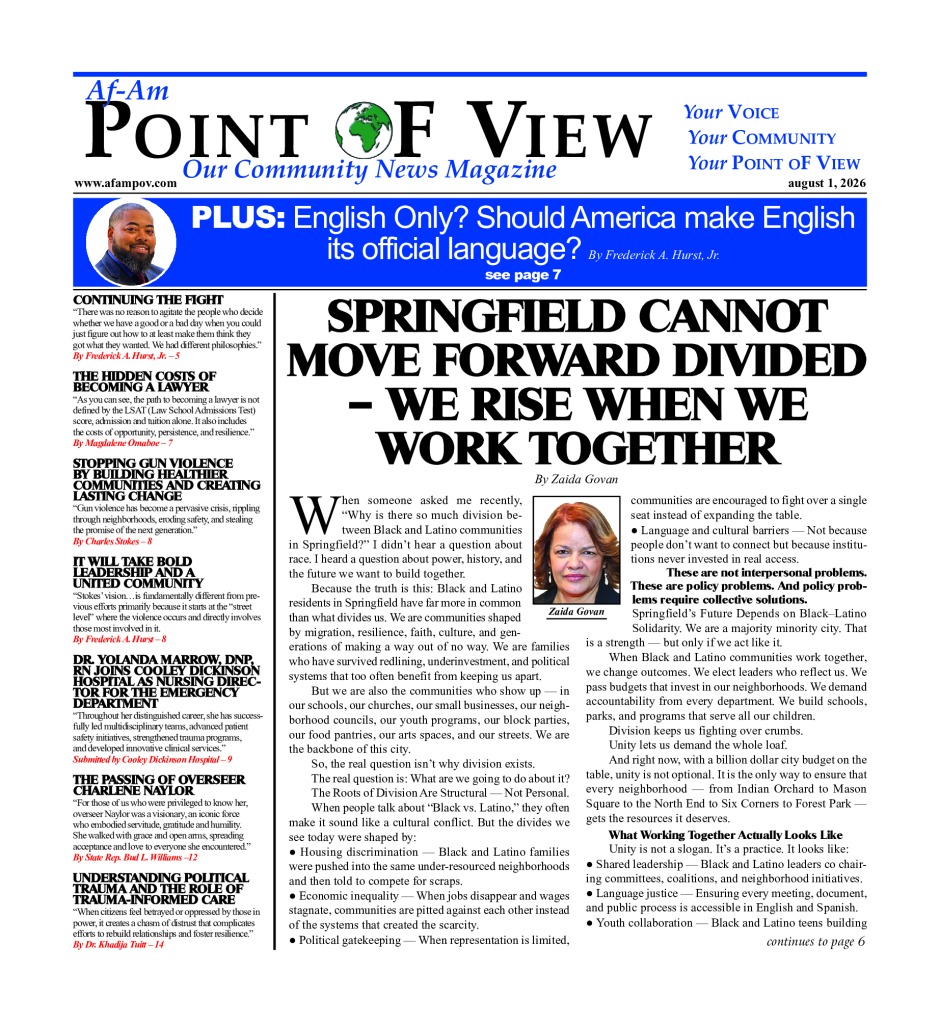
July 2026
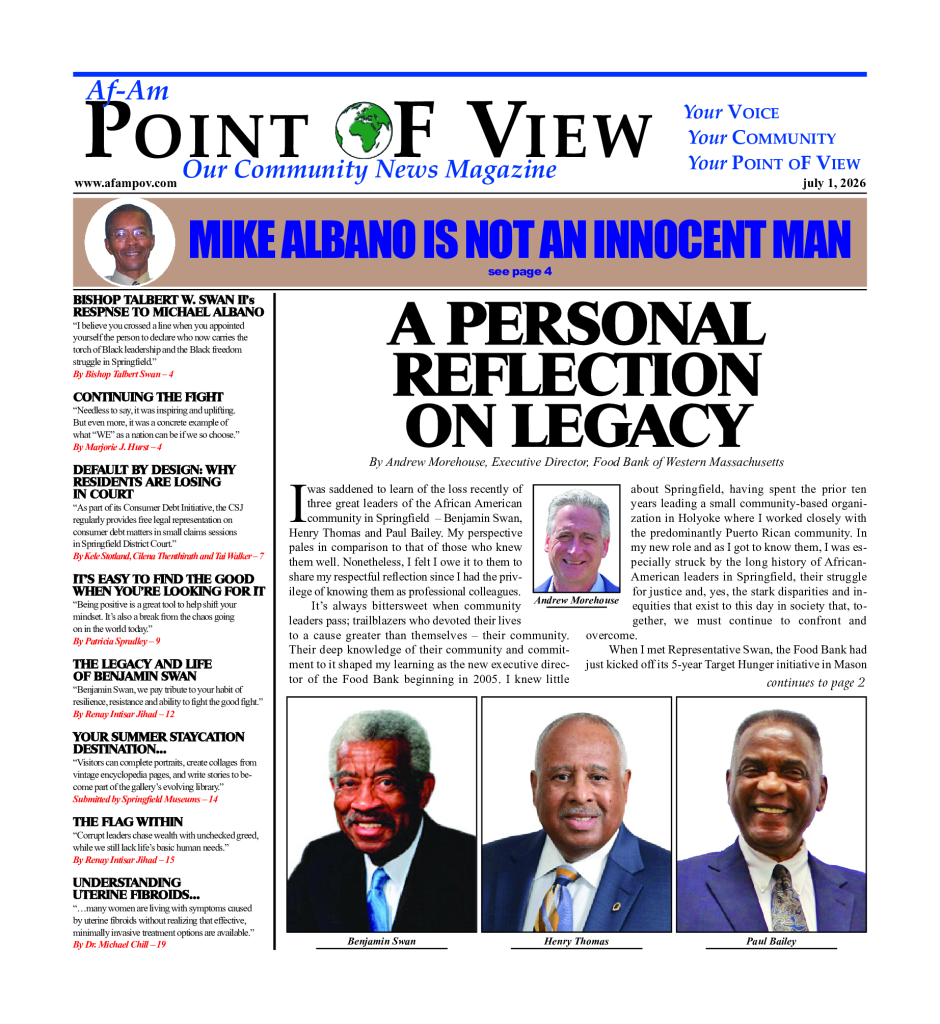
June 2026
May 2026
See More Past Issues of Af-Am Point of View Newsmagazine